The Deutsche Tourenwagen Meisterschaft (DTM) Was Art In Motion, Here’s The Reasons Why!

In the world of motorsports, Touring Cars is one of the most revered racing series going. Unlike Formula 1 or Rally Racing, the whole ethos of Touring Cars is to have close racing between top drivers and top teams whilst driving cars you would normally see parked on the street. Back in the early days of touring cars, a phrase was coined. That phrase was ‘Race on Sunday, Buy on Monday’. This phrase was coined so people would watch the close racing on Sunday and then hopefully buy the road-going version of the race car on Monday. For decades, that simple phrase created rivalries both on & off the track and has created many memories along the way.

Unfortunately, in this day and age, it seems that Touring cars have somewhat lost their way. Sure the racing is still very close and there are top teams from all over the country taking part but it seems to have lost its edge. Back in the eighties & nineties, this was different. In the UK we had the likes of the ‘SuperTouring Era’ of the British Touring Car Championship (BTCC) but in Germany, they had something even better called the ‘Deutsche Tourenwagen Meisterschaft’ or ‘DTM’ for short.
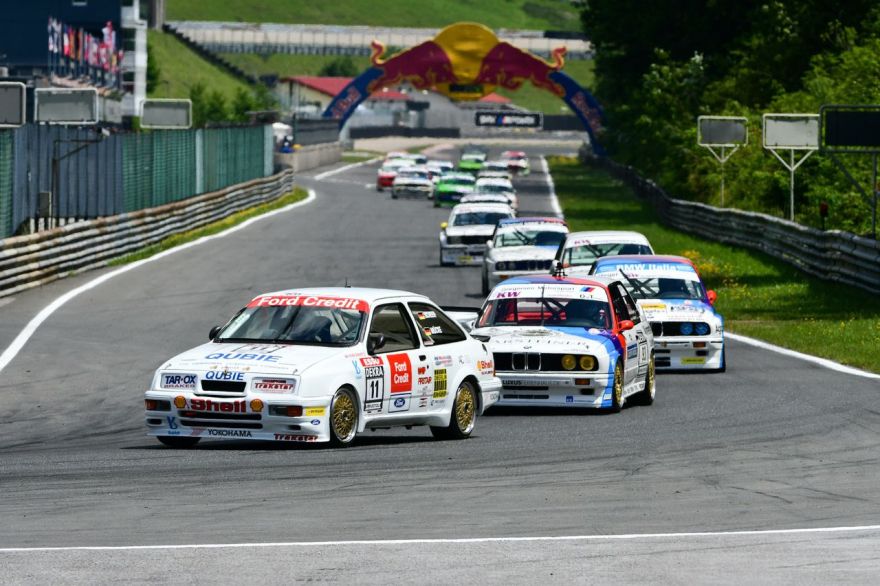
DTM was the epitome of touring car racing during the 80s and the 90s. DTM was established way back in 1984 and whilst that doesn’t sound too long ago, it would’ve been 40 years old last year. Originally featuring races at iconic German circuits, the series started to really gain traction towards the late eighties and early nineties.

The main reason for the increased traction during those times was due to a lot of different factors. Firstly, the racing was incredibly close. It was completely normal to see multiple battles happening throughout the field of cars. Talking of cars, a lot of the popularity came from the cars themselves. Compared to the SuperTouring Era of BTCC mentioned earlier, the DTM Cars were completely different gravy.

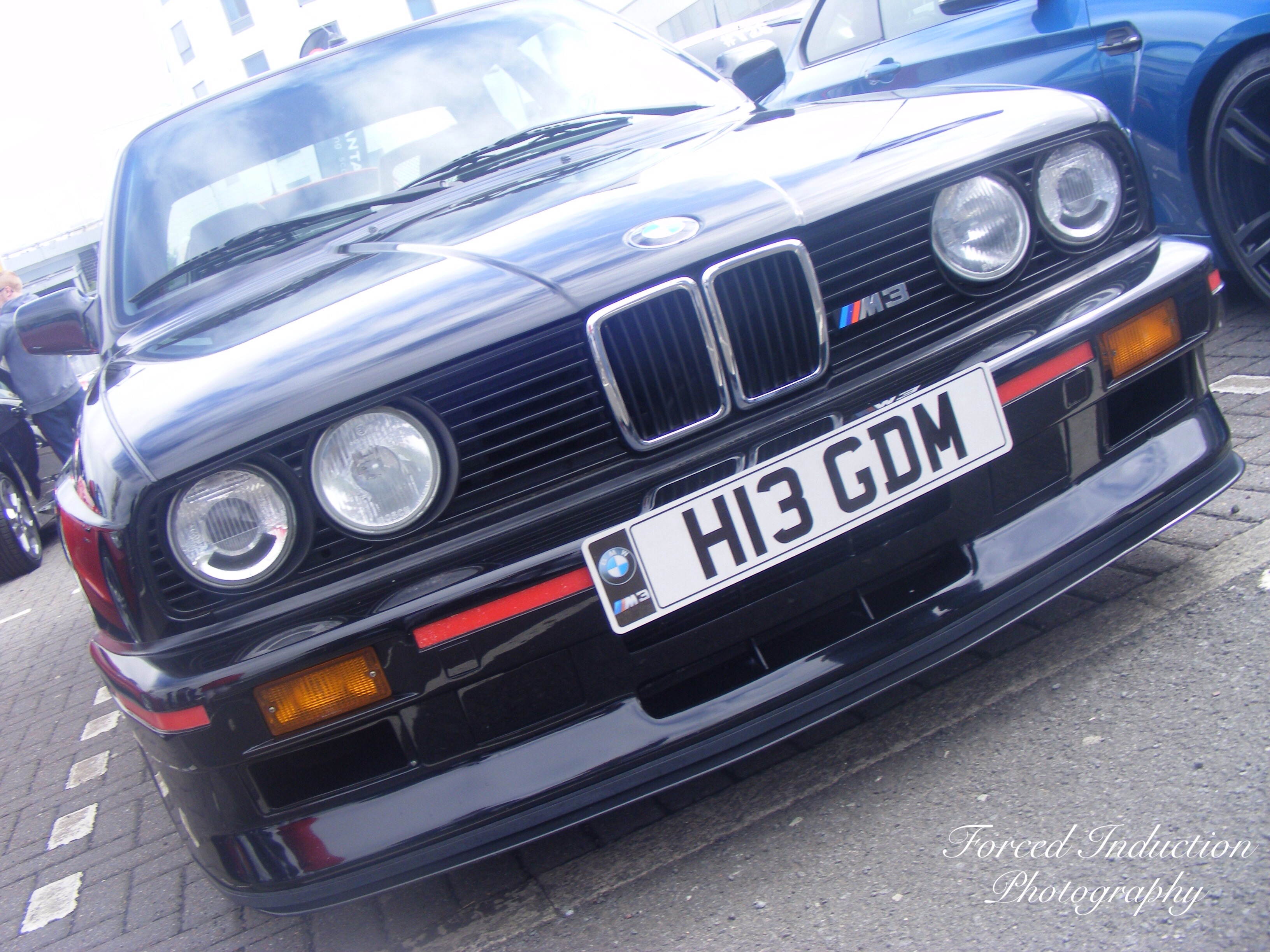
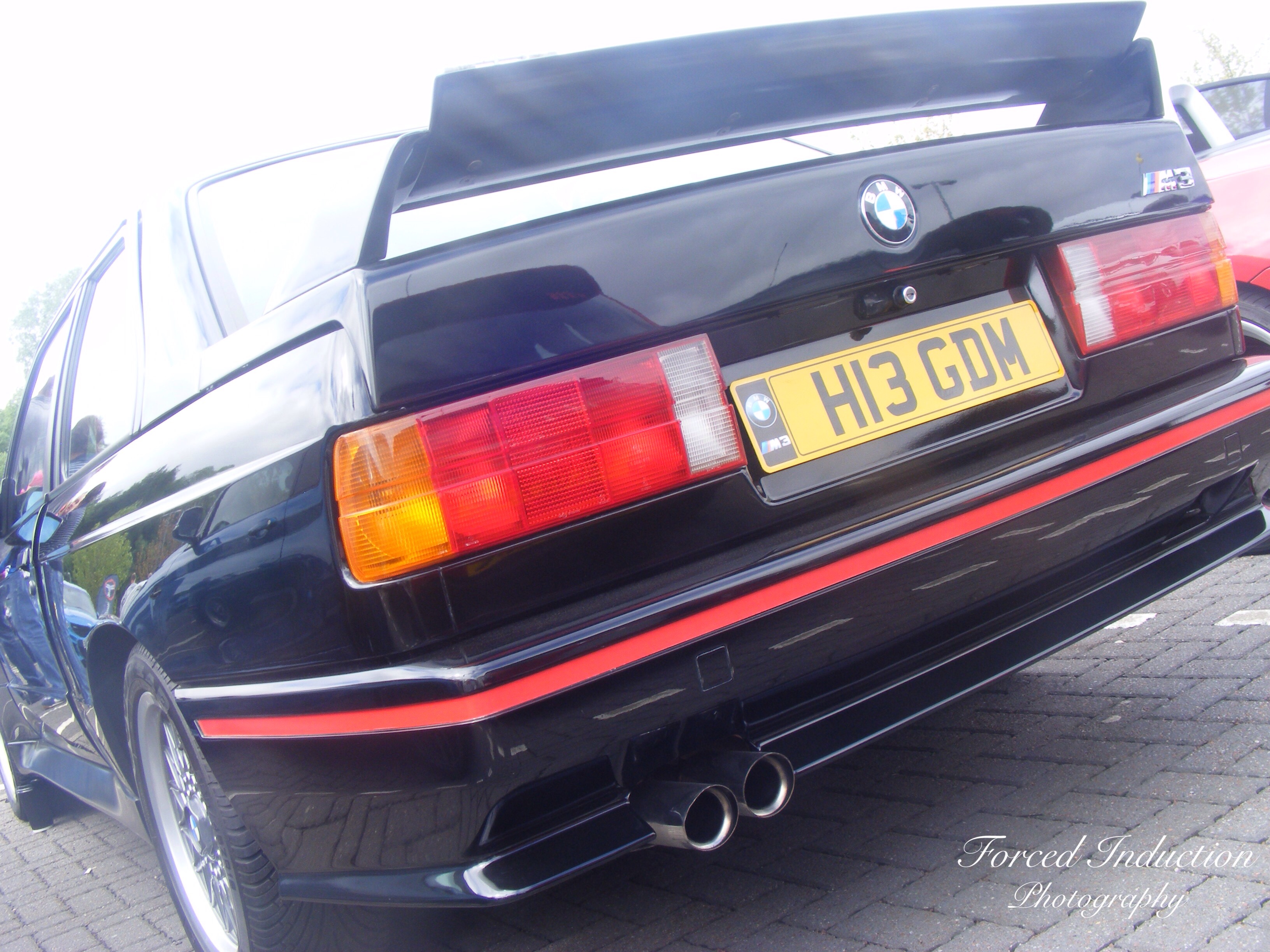
You had a plethora of different manufacturers competing against one another with a lot of those cars being homologation specials. These included the BMW E30 M3, the Mercedes-Benz 190E Evo II, the Opel/Vauxhall Calibra DTM, the Ford Sierra RS500, the Audi V8 Quattro & of course the Alfa 155 V6.
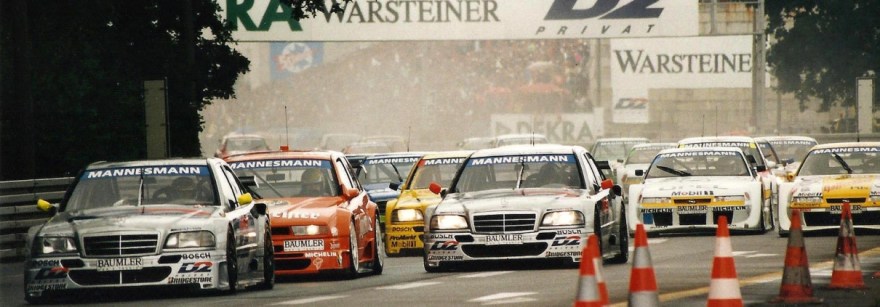
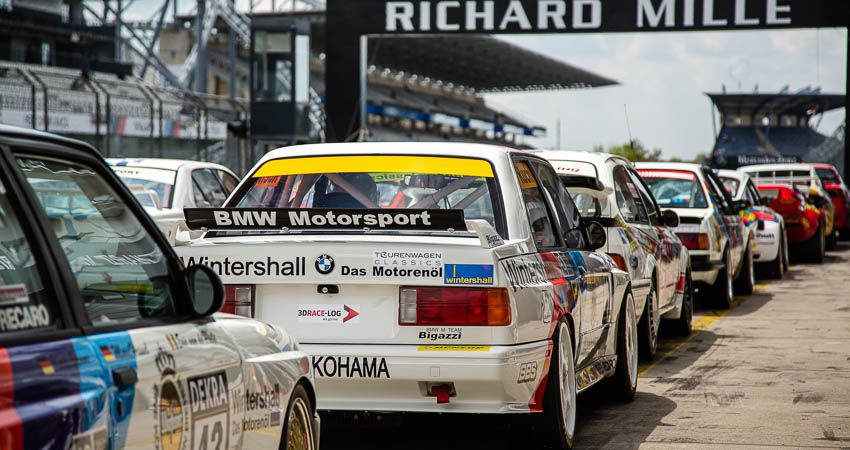
Every car that competed also had different characteristics as well, Take the M3 DTM for example. Based upon the second generation BMW 3 Series (E30), the E30 generation of the M3 was the first generation of the M3 model that has become synonymous with high-performance motoring. When competing in the DTM series, it soon became one of the most prolific race cars to ever exist.
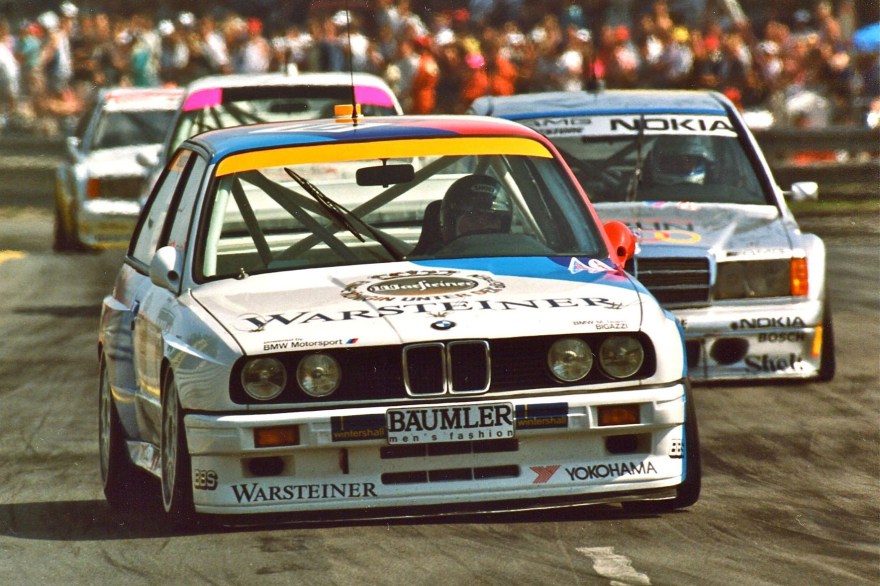
With Its light weight, it’s superb handling & powerful engine, it was no surprise the M3 became a legendary car in the DTM series during the 1990s. With the BMW becoming a very successful race car, it had a lot of stiff competition and rightly so.
One of these competitors was Mercedes-Benz. As any motorsports fan knows, Mercedes-Benz has a lot of history on the race tracks and even now in 2025, they’re still at it in both Formula 1 and WEC/GT racing. During the days of DTM, they took the humble 190E, shipped it to the UK to create the M3-rivalling 190E Cosworth 2.3-16 and then improved it even more to create the two homologation models, the Evo I and then the insane Evo II.

While the Deutsche Tourenwagen Meisterschaft was first contested by privately entered Mercedes-Benz 190E 2.3-16s in 1986, it wasn’t until 1988 that Mercedes themselves made its factory debut in the competition.
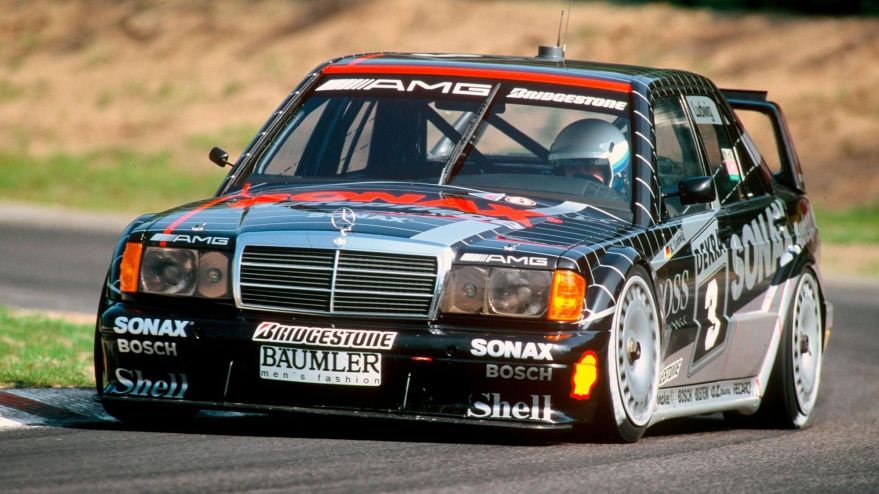
Mercedes had designs to conquer the field alongside its long-time technical partner, AMG. Incumbent champion, Klaus Ludwig, was taken from Ford to Mercedes-Benz’s 1989 campaign, unfortunately, the first three seasons didn’t entirely go to plan and were deemed to be an underachievement.
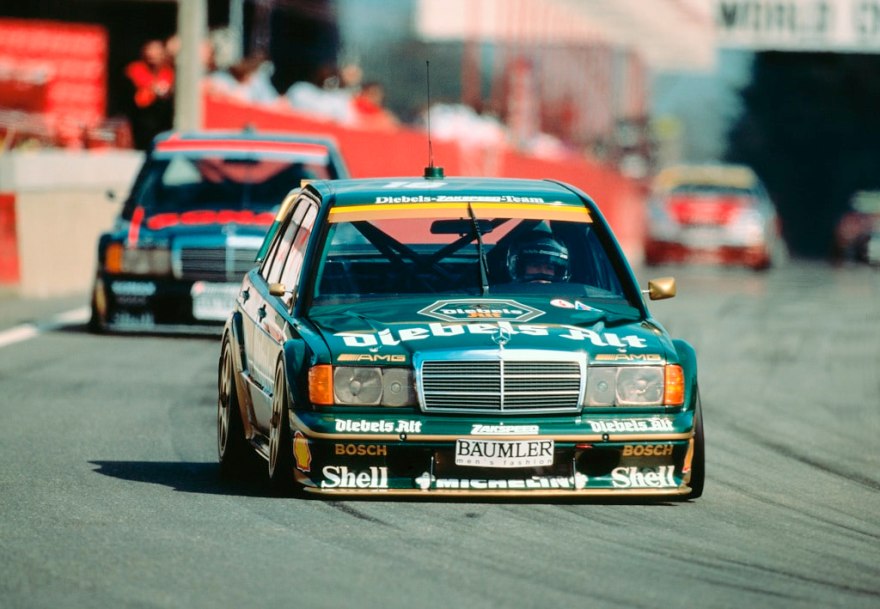
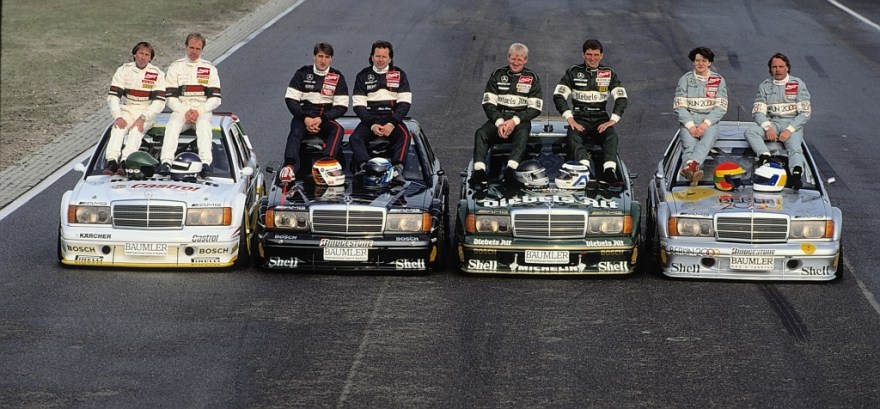
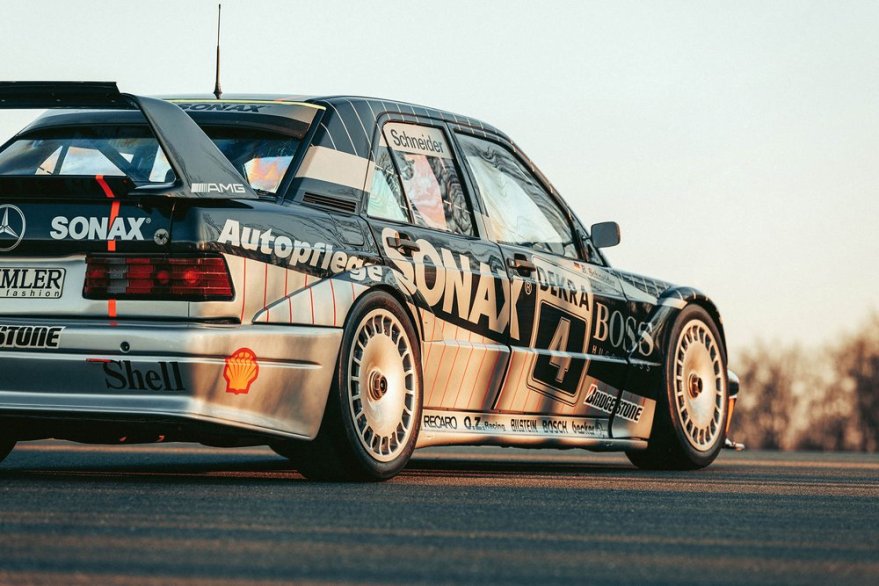
For the ’92 season, Mercedes-Benz decided to recruit Bernd Schneider to join Ludwig, Keke Rosberg and Ellen Lohr as AMG’s four-car “super team”. By this point, the 190E had become the now infamous ‘Evo II’ model. This version of the 190E was striking, to say the least.
With deep front and rear bumpers, a wider track & big wheels that sit under widened arches and a rear wing that would make a Subaru Impreza jealous, the 190E Evo II was the ultimate version of an already fantastic car. True eighties excess in all of its glory.
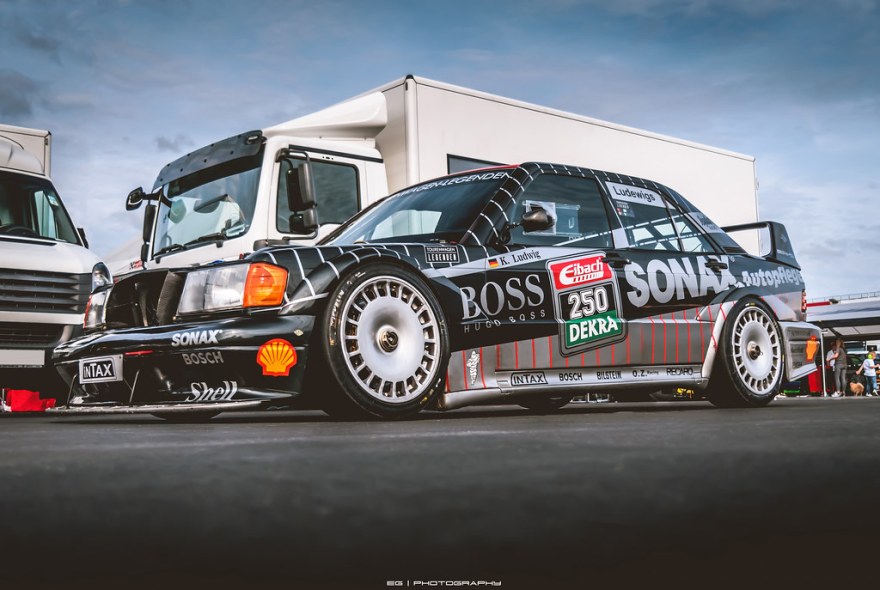
Powered by a 2.5 16v 4-cylinder engine putting out about 330bhp, the Evo II could hit 185mph in race trim. This made it one of the fastest cars on the grid at the time. The Evo II was so successful on track that it soon started a rivalry between BMW and Mercedes-Benz fans the world over. BMW and Mercedes-Benz believed they had the motorsport on lock at one point. Still, there was also one particular manufacturer that had a very successful multi-decade motorsports history that was about to cause absolute chaos on the grid. The manufacturer in question?! Well, that was Ford of course!
Ford has had a rich history of creating lightweight but incredibly quick race cars over the years. during the 1960s, they decided to take the humble Cortina model from their lineup and send it to Lotus Cars so that they could tweak it for race use and thus the Lotus Cortina was created. The Cortina soon became one of the most successful race cars of Its period and soon paved the way for even quicker and even more lairy race cars to succeed it. During the 1980s, Ford decided to use the then-new Ford Sierra as its base for true world domination and boy did they succeed.
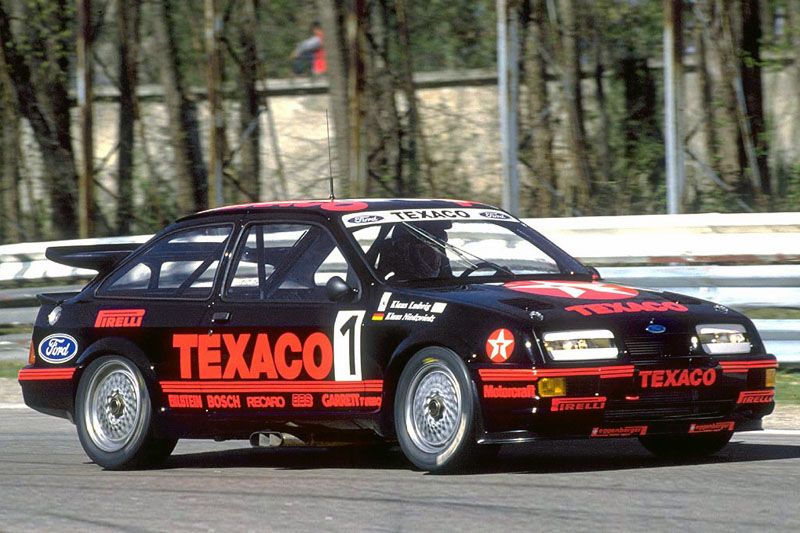
Starting in 1985, the Sierra started to make waves in touring car races under the guise of Andy Rouse. Andy was a very competitive driver in the BTCC Championship during the eighties and in 1985 he decided to pilot a Merkur XR4Ti in the hopes that something good could come out of it and boy was he onto something. The Merkur variant of the Sierra wasn’t actually sold in Europe under that badge so the ’85 race car was an import that was brought over from America to go racing.

The Merkur race car soon became very successful, and Ford themselves started to take notice of the prowess the humble Sierra was capable of. This caused Ford to go full steam ahead both in marketing and in setting up factory race cars. The outcome of all this birthed one of the most notable road and race cars of all time—the Ford Sierra RS Cosworth!
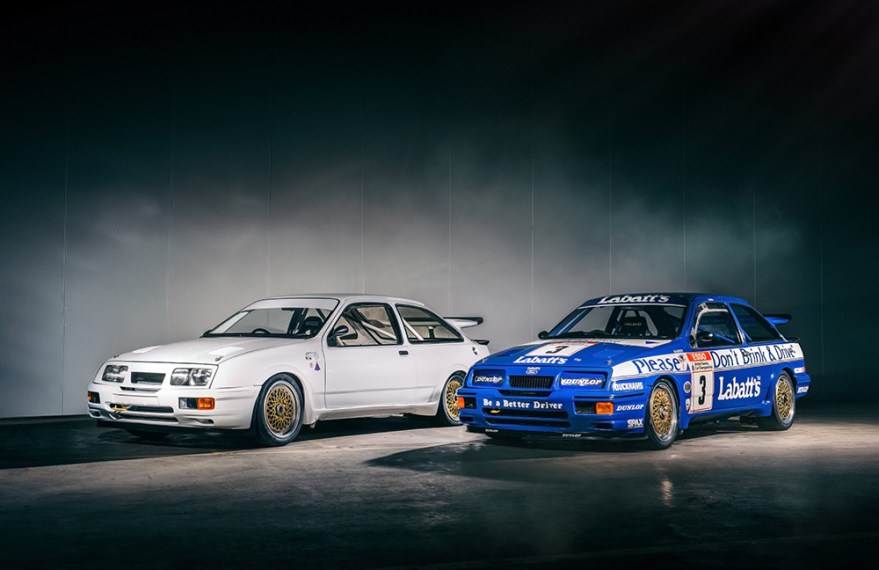
Now, the Ford Sierra RS Cosworth doesn’t really need an introduction to anybody but if there is anyone out there who has never heard of such a legend, as the name suggests Ford Europe took a batch of their 2.0-litre four-cylinder ‘Pinto’ engines to Cosworth in the UK to create one of the best performing four-cylinder engines to ever exist – the Cosworth YB! This engine might have come from humble beginnings but with the know-how of Cosworth and their mechanical know-how alongside the use of a turbocharger the size of a dustbin lid, the RS Cosworth was born to rip up every single rulebook that was ever created.
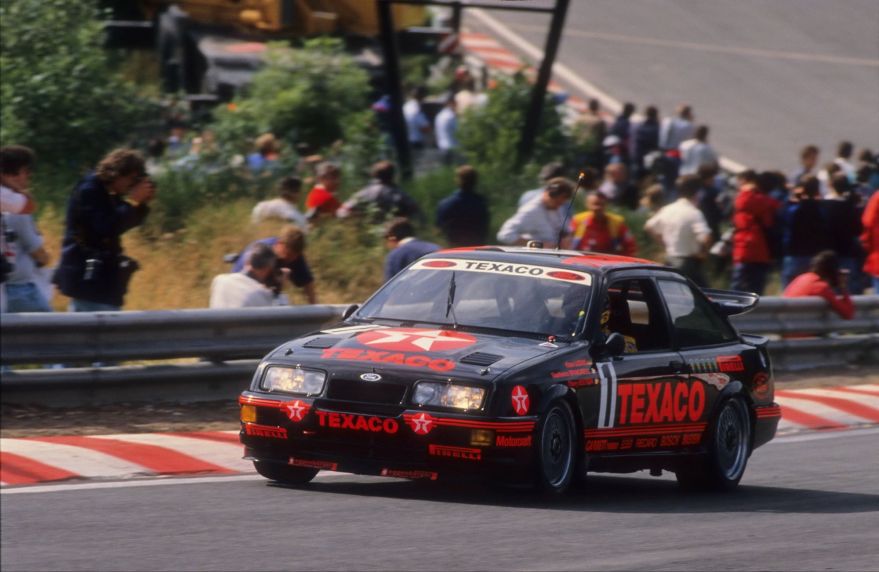
To go racing, Ford Europe decided to make a hardcore, race-ready version of the regular RS Cosworth that was built with the intent of going racing. They decided to call the Homologation car the Sierra Cosworth RS500. If the regular Cosworth was considered to be an absolute weapon then the RS500 was an absolute force to be reckoned with. Power was upped from 205 bhp to 225 bhp which might not sound like much but for the eighties that was a significant boost. This was done by fitting a larger T04 turbocharger, thicker and more durable cylinder walls in the block of the actual engine itself as well as other goodies like a larger air-to-air intercooler, an upgraded oil cooler system, an upgraded fuel pump & injectors and a reworked induction system to name a few.

This meant that when it came to the race cars, they were putting well over 500bhp through the rear wheels. That’s a lot when you remember that these cars didn’t have any driver-aids whatsoever and were as light as possible. The only thing you had to keep the car on track was the aerodynamics and the massive cahonies of the drivers that used to pilot these things. A truly different era of motorsport.
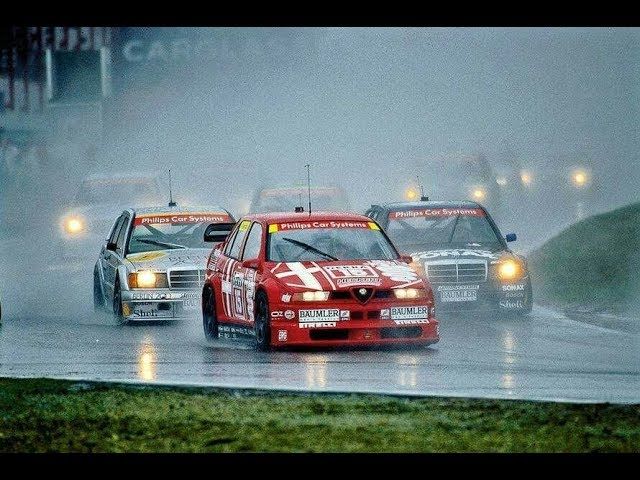
By the nineties, a lot of manufacturers who were already known for taking part in other types of motorsports were starting to take notice of the DTM races series. Three of these manufacturers were Audi, Alfa Romeo & Opel. With technology becoming more and more apparent, these three companies decided to push the boundaries even further than those who were already competing during the eighties.

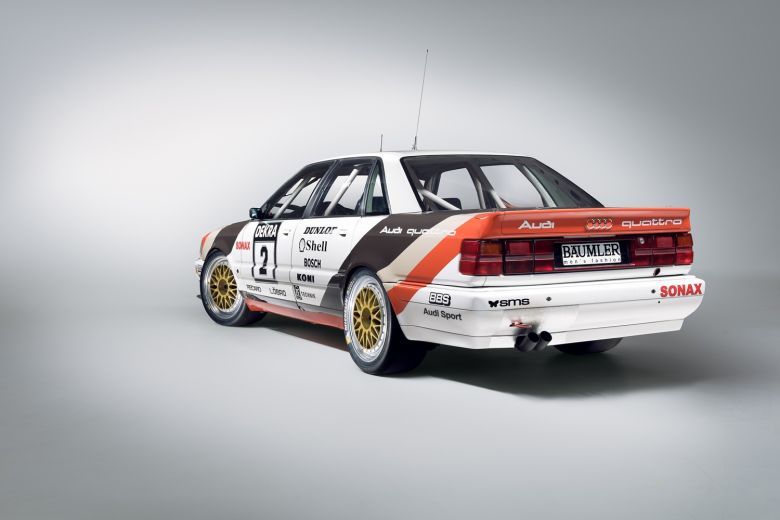
Audi entered the scene in 1990 with a racing variant of their V8 Sport Quattro. Powered by a 3.6 V8 engine, this was a completely different animal from the turbocharged cars of the era. Even so, it didn’t take long for the Audi to prove itself with its advanced for-the-time technology and AWD system. Even though it faced fierce competition from the BMW M3 and the 190E Evo II, the Audi was a lot more stable and with its V8 powertrain could easily keep up and even outperform the rivals.
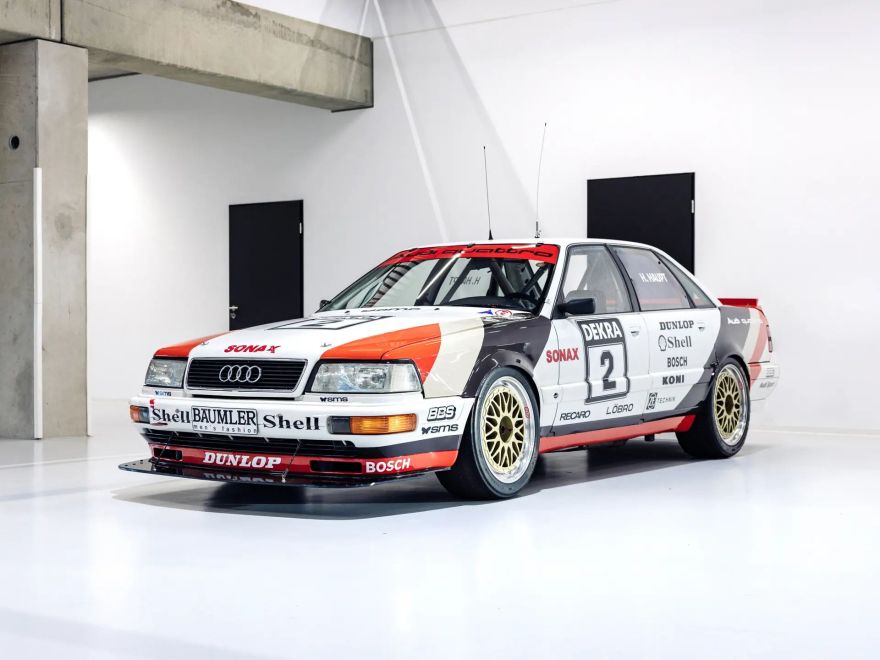
No surprise really when you remember that Audi had completely torn apart the Group B rally era of racing with their infamous UR Quattro. If anyone was going to show the other teams who was boss then it had to be Audi. The thing is though, Audi wasn’t the only one who had come from the rally scene and then transferred to the touring car scene and had massive success.
The guys at Opel decided that they wanted to be a part of the action too. Now just like Audi, Opel had also had a lot of history in the world of rallying with both the Manta and the Kaddett. However, unlike Audi, Opel and their UK sister company Vauxhall had a lot of experience on race tracks as well with both the MK2 Astra & the MK3 Cavalier respectively being very competitive in the UK.
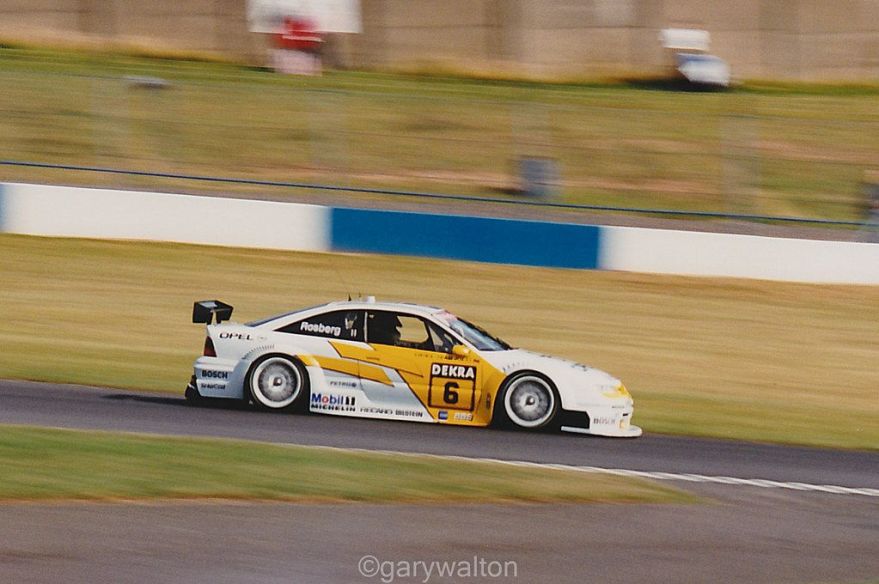
For the DTM series, Opel decided to use the very pretty Calibra V6 as the basis for their latest track monster and by god was it good. The standard road car was a brilliant bit of kit and was once the most aerodynamic car in the world upon Its release in 1989. Upon its entry into DTM in 1993, the Calibra V6 DTM soon made a name for itself very quickly.
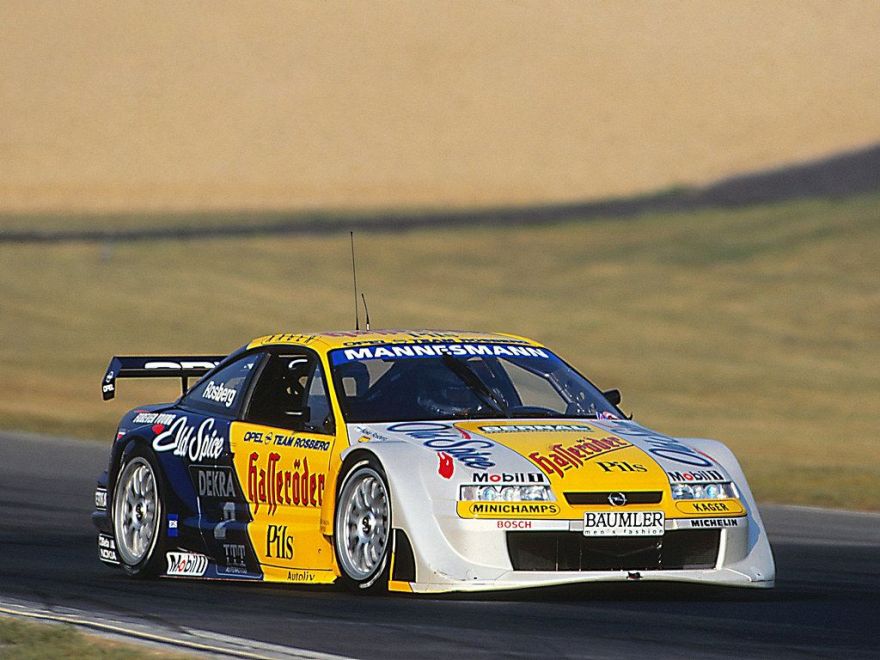
See, in 1993 the DTM series went through a lot of changes and one of those changes was the regulations. during the eighties, the DTM cars were all under Group A regulations which created incredible battles but by the end were seen as being out of control and had performance figures nowhere near their road-going counterparts. The Calibra on the other hand was one of the first cars to compete in the then-new Class 1 regulations.
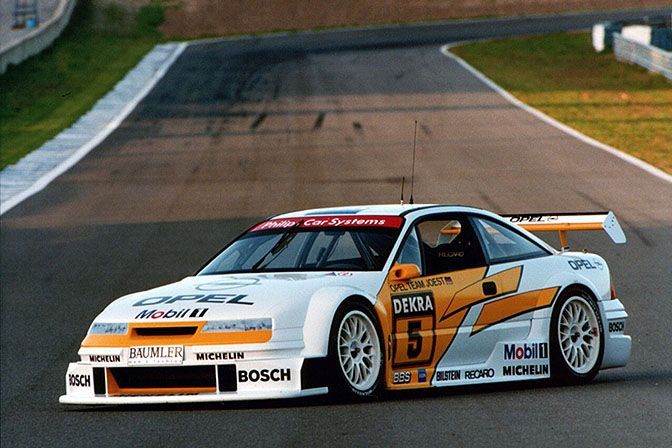
Class 1 regulations were brought in to improve the competition and make it a level playing field compared to Group A, which would unite more fans and teams to the sport. To make the racing more competitive, engines were capped at 4.0 V8s that could put out anywhere between 450bhp-500bhp depending on track & setup. There was also a weight limit of anywhere between 1100kg-1200kg depending on configuration & track layout.
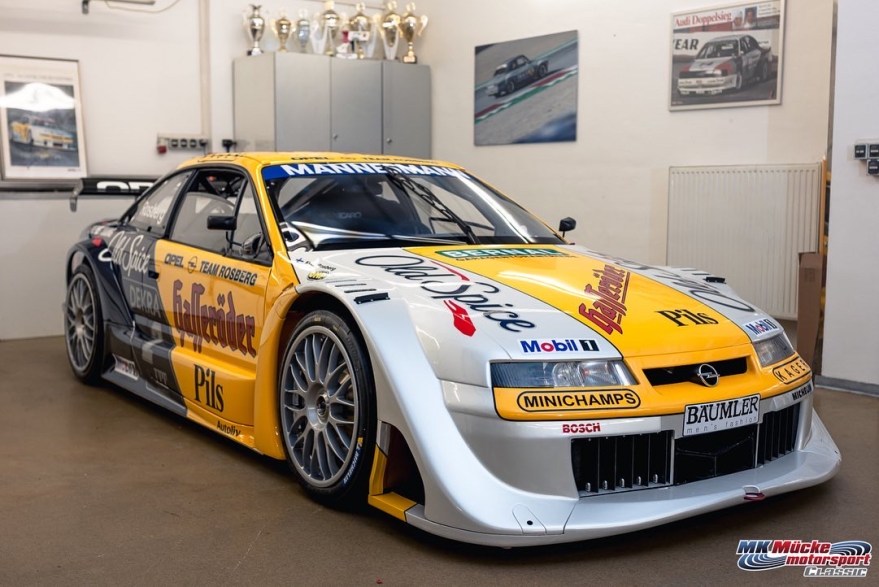
The Opel wound up bringing a lot of fans to DTM and it has become one of the most infamous race cars to ever compete in the series. With an AWD system similar to that of Audi’s Quattro system, the Calibra could put its power down even in the poorest of conditions. Add in the power from that mighty V6 engine and its ferocious power going through a 6-speed sequential gearbox and it was no surprise that it took the championship in 1996.

Now if you have got this far, you’ll notice that apart from Ford’s entry into the sport, the rest of the field has been full of German race cars from German manufacturers racing on, you guessed it, German race tracks. Because of this, you’d automatically assume that the DTM was a German-only motorsport but this wasn’t the case whatsoever.
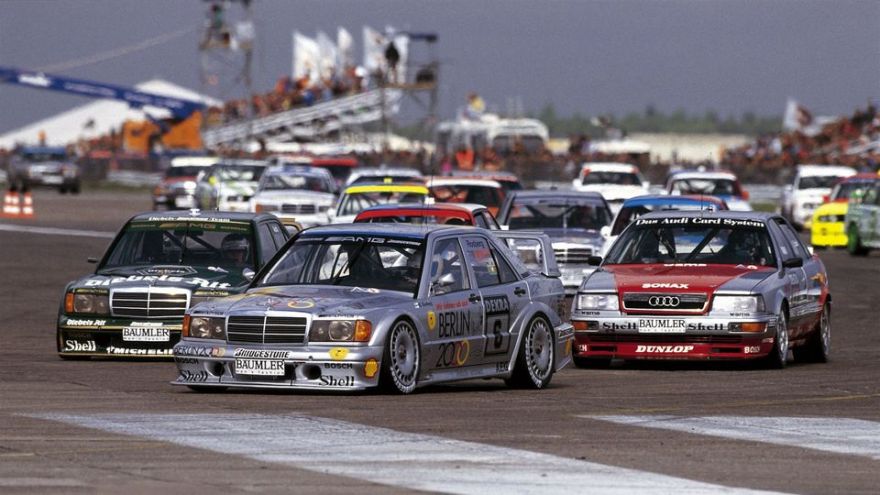
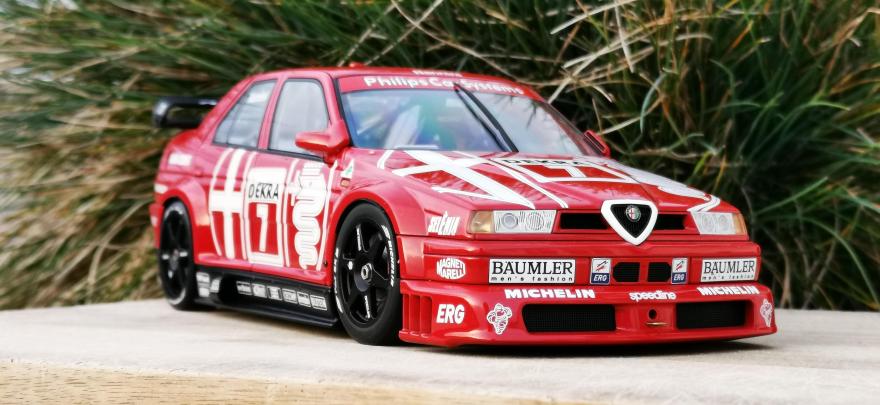
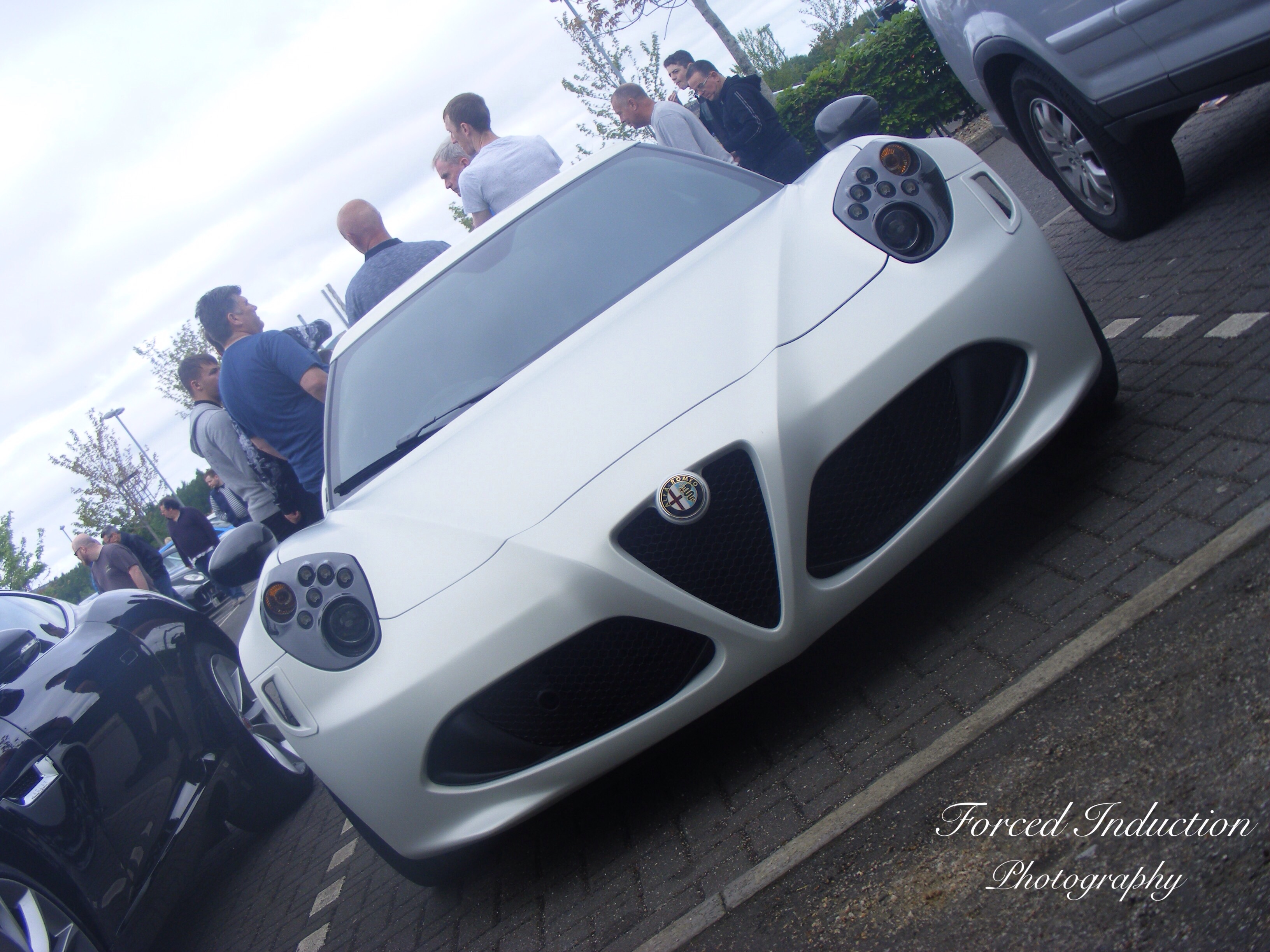
See, in 1993, just as the covers were coming off the Calibra DTM mentioned above, Alfa Romeo decided to get involved in the DTM series with an absolutely glorious version of their humble 155 saloon. Called the Alfa Romeo 155 V6 Ti, this stunning piece of machinery was the only non-German car to compete in the glory days of the DTM series.

Alfa Romeo was not here to piss about either because under that sleek bodywork was a 2.5 V6 engine shared with the road car albeit putting out somewhere between 420bhp-450bhp depending on configuration. Just like the Calibra, it was also competing under the Class 1 regulations and it was also AWD too. Just like Opel, Alfa Romeo also has a lot of motorsport history under their belt and they were also very competitive in touring car racing during the nineties. In BTTC especially, the Alfa’s were driven fast and hard and were always within the points. they also looked glorious and sounded as good as they looked.

The DTM car was a completely different kettle of fish though. Unlike its BTCC counterpart, the DTM car was turned up to 11 and then some. This was a fire-spitting monster that could easily turn a Ferrari F1 fan into an Alfa Romeo DTM fan. Even after 30 years since its introduction, the 155 V6 Ti DTM is still revered to be one of the best cars in the whole series.

By 1994, the team had fixed a lot of issues that the ’93 car had. At a similar time, Alfa Romeo started to employ very famous race car drivers into the team, with one of those drivers being Gabriele Tarquini. With Tarquini behind the wheel, it was a match made in Italian heaven. Here was a car that was made specifically for the championship it was competing in driven by one of the best race car drivers to ever do it working in tandem with one another. Tarquini could push the car on and on with every lap and the car didn’t even break a sweat.
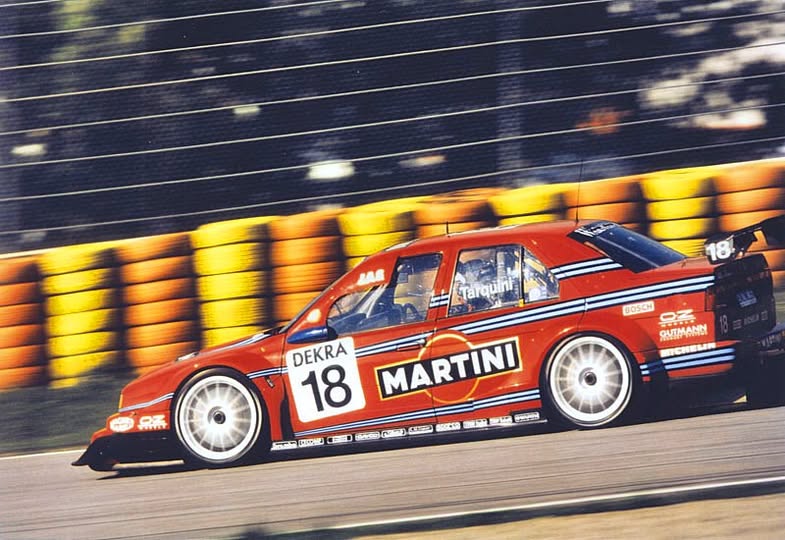
in 1995 and 1996, the car showed a solid performance on track with both Tarquini and Alessandro Nannini behind the wheel. the whole team and the cars in question brought a touch of Italian class into what was a very exciting but somewhat unknown racing series. Whilst the car couldn’t quite keep up with Mercedes-Benz during these seasons, the 155 was still a fan favourite amongst fans and its legacy still lives on today.
Unfortunately during the late nineties, the DTM series started to face a period of decline due to rising costs, regulation changes and a lack of competing manufacturers. this caused the discontinuation of the sport in 1996. The ITR who were in charge went back to the drawing board to come up with what we now know as the current DTM series. When the DTM series returned in the early ’00s, it was now called the Deutsche Tourenwagen Masters.
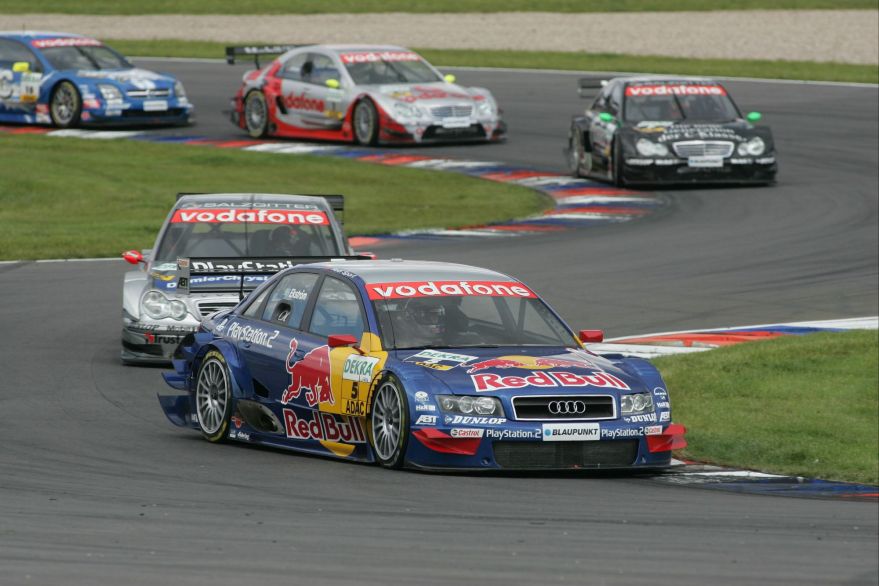
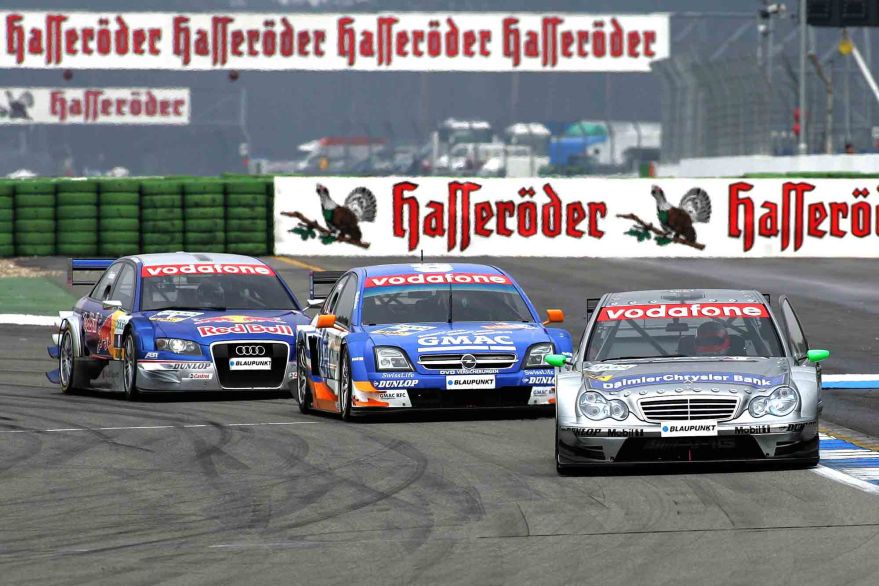
Even though there was a name change and a regulation change, the racing has been as competitive as ever and is now a staple of touring car racing. It might not have the character of the original DTM but the racing is still as exciting as it ever was. In its current form, it takes on more of a GT3 vibe albeit on German tracks but the racing and the atmosphere are still some of the best you’ll see around the world!
So here you have it. Here’s everything you need to know about one of the best racing series to ever exist during the heyday of motorsports. Many racing events and race series don’t always create wheel-to-wheel racing anymore due to driver regulations, team regulations and lately, even track limitations. If like me, you are an F1 fan, you’ll know exactly what I’m talking about. The original DTM series was different though. you had top drivers piloting some of the best cars from a plethora of top manufacturers on some of the most technical and dangerous tracks the world has to offer racing as close as humanly possible and whilst it was for a championship at the end of the year, it was also for our entertainment too. Racing will never be the same ever again!

Hope you Enjoy!

By Alex Jebson
Why I Left Motherwell College!

Now apart from the Progress on the C70 or on the Legacy I don’t normally post about my personal life too much but this is something I can’t not post – I’ve left the College for good!, it’s not been an easy situation but it couldn’t be helped.

Now for the last 4 years I’ve been a College student studying Vehicle Mechanics, I done two years in Kilmarnock College and the last two years up in Motherwell College, out of the two colleges I preferred Motherwell solely because they never put anyone down and always pushed their students to do their very best in whatever they done.

For the two years I was in there I studied Level 1 Heavy Vehicle Mechanics on HGV’s and on the course I’ve just finished I was studying Level 2 Light Vehicle Mechanics – Cars to me and you!

I’ve Enjoyed every second of the two years I’ve been there and I’ve met some brilliant people, made some mates plus gotten on with everyone I’ve come across in there which is something I’ve never been able to do before through school or even in my old college neither.

So what is making me leave? well unfortunately I suffer from Epilepsy which is quite severe and have done since 2014 and recently I’ve been suffering from some memory problems due to the fits, now not everyone who has epilepsy suffers from memory problems but there are some people who do and unfortunately I’m one of them and due to the work involved in the 3rd year course and the stresses which come along with that I don’t want to put my health at risk and possibly have another fit so I’ve decided to leave.

The Tutors and all the staff I’ve been involved with are all supportive of my decision to leave and are understandable of the reasons I’m leaving and wish me good luck in the future in whatever I do which has taken a lot of stress off my shoulders.

Now I will definitely miss Motherwell College as it’s been one of the best places I’ve ever had the pleasure of going to. It’s the only educational building I’ve ever been under who have actually pushed me into not just being a better Mechanic but a better person overall so for that reason alone I will definitely miss it, as well as that I’ve also met some brilliant tutors and made some brilliant mates too as mentioned above who I will miss dearly as well.

So what is the next step for me now I’ve left the college?, well for a start off I will have more time on my hands to fix up both the C70 and now the Legacy, I’ll have more time to go to more car meets like Tartan Tarmac and other places plus I would like to turn Forced Induction into a fully fledged business which will then mean I’ll hopefully become a self taught self employed Automotive Journalist which is something I’ve had in plans for ages now and with me leaving the college I can now focus on that more than I currently am.

For anyone who is ever contemplating on going to Motherwell College or even any of the other New College Lanarkshire Campuses I definitely recommend them to anybody as they are absolutely brilliant and have treated me and others with the up-most respect ever, you’ll definitely enjoy it up there!

It’s a shame it’s had to come to this but I feel it’s the best for me to leave and focus on other things in my life and sort my health before I have another fit and it leaves me back at square one all over again.


By Alex Jebson

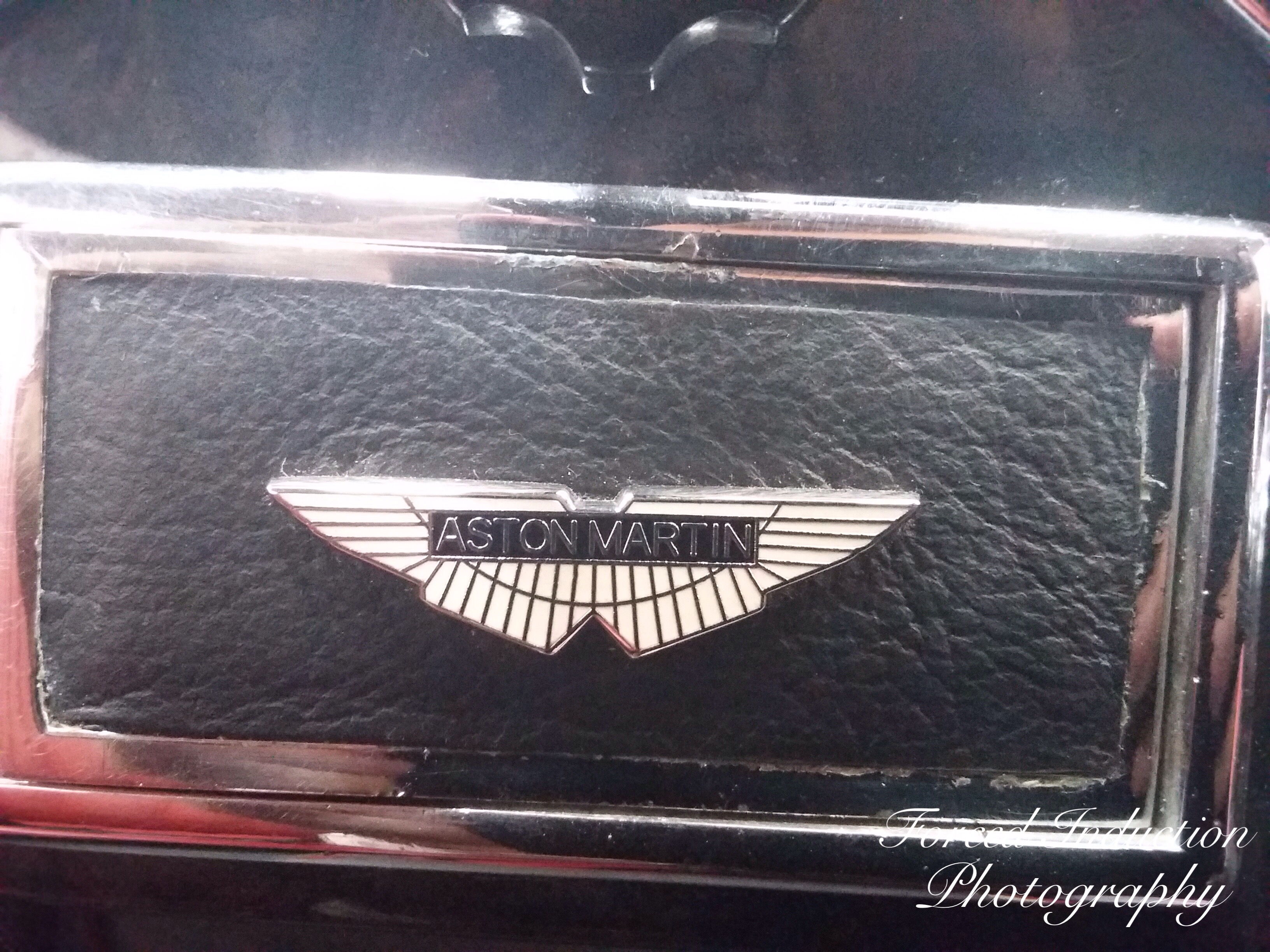
How i fell in love with a Classic Aston Martin!

Now Ever since I was a young boy I’ve always loved Aston Martins, they were just the perfect Marque in my mind – stunning exteriors, marvelous sounding engines and absolutely gorgeous interiors plus being associated with James Bond himself made me fall for them straight away, for me they are definitely my dream Marque with the DB9 being my dream car! 

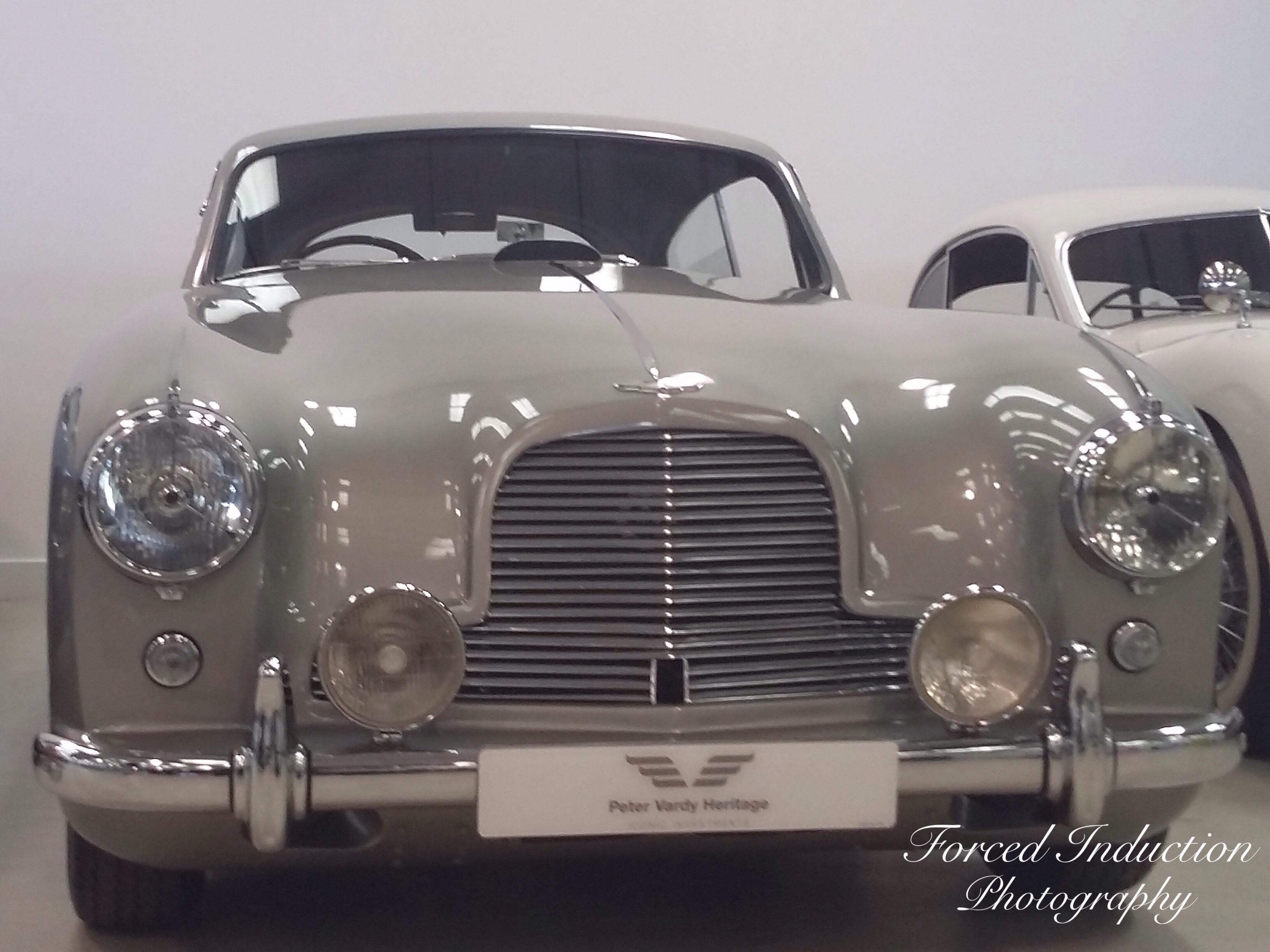
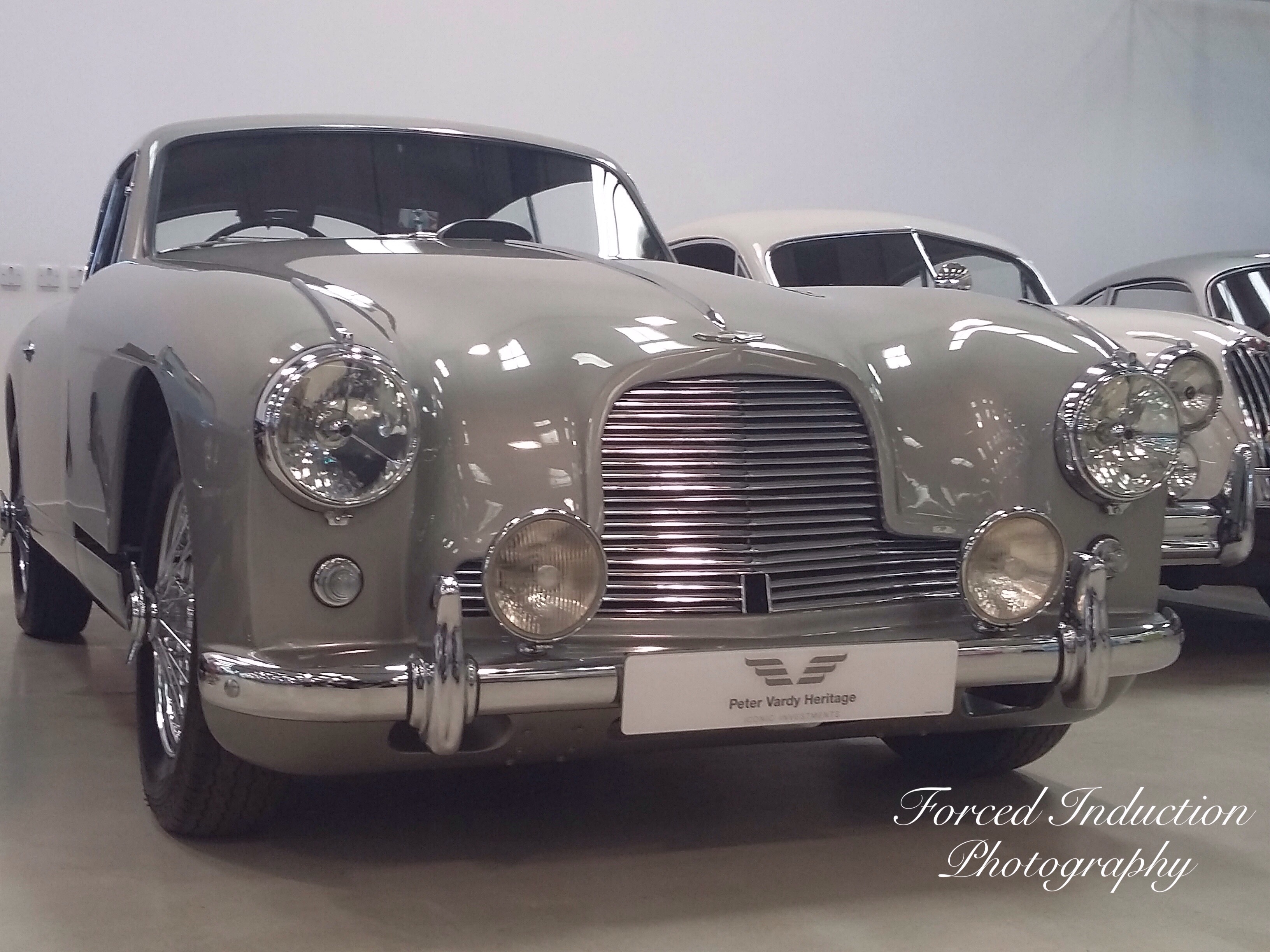
Now for me, I love the Classic Aston Martins as they are just simply gorgeous with the DB5 taking the top spot – thanks no end to the Bond Films, so when I got the chance to get up close and personal to a 1954 DB2/4 I immediately snapped up the opportunity and thank god I did! 

The DB2/4 was a GT car produced between 1953 till 1957 and was a rival for the Jaguar XK140 and the Mercedes 300SL Gullwing as well as many others from when GT cars were the cars to have, it was based on the DB2 which it replaced but with a few changes here and there which included a wraparound windscreen, larger bumpers and repositioned lights, it was available in three body styles; Saloon, Fixed Head Coupe (FHC for Short) and as a Drop Head Coupe (DHC For Short) 

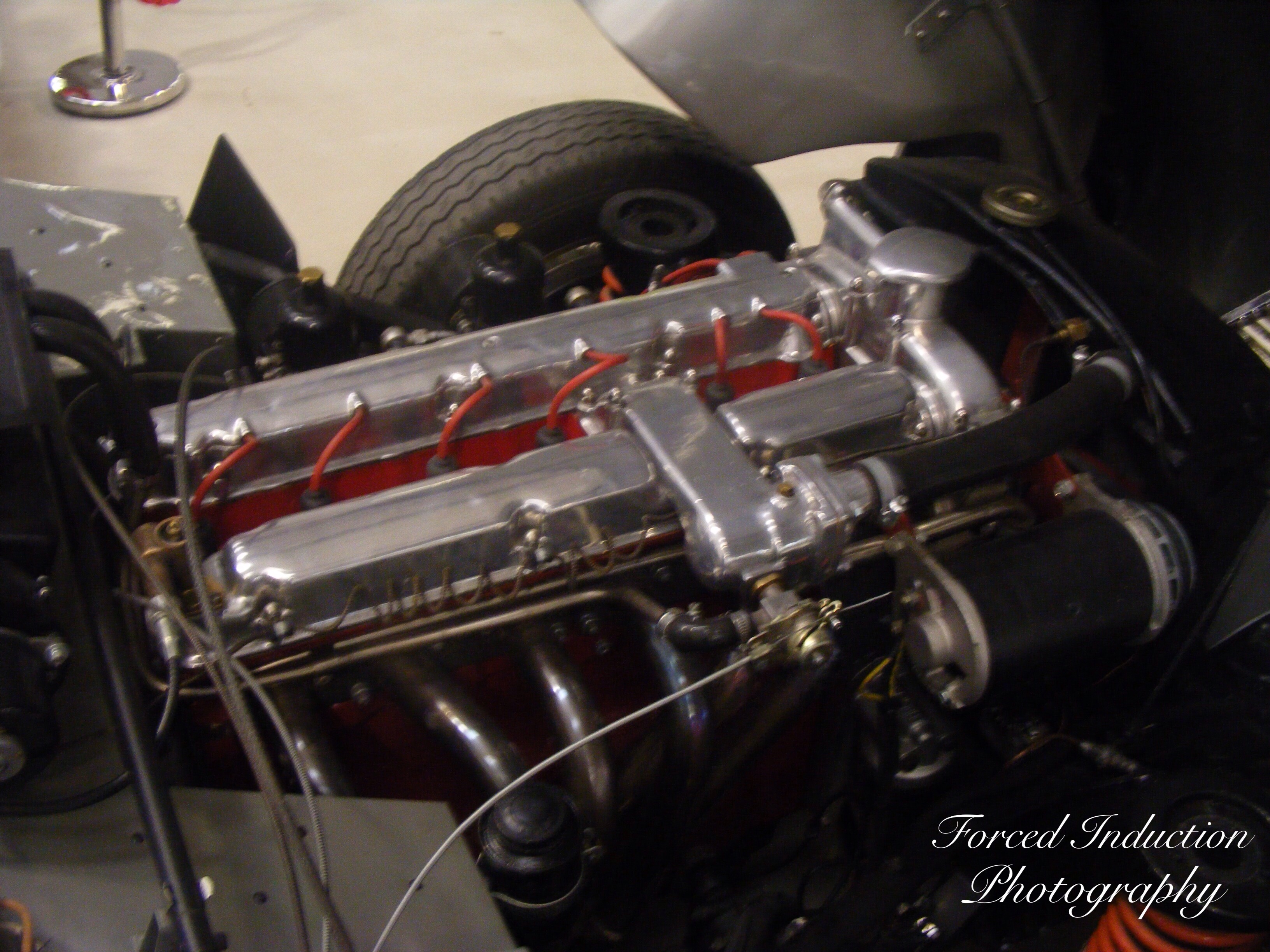
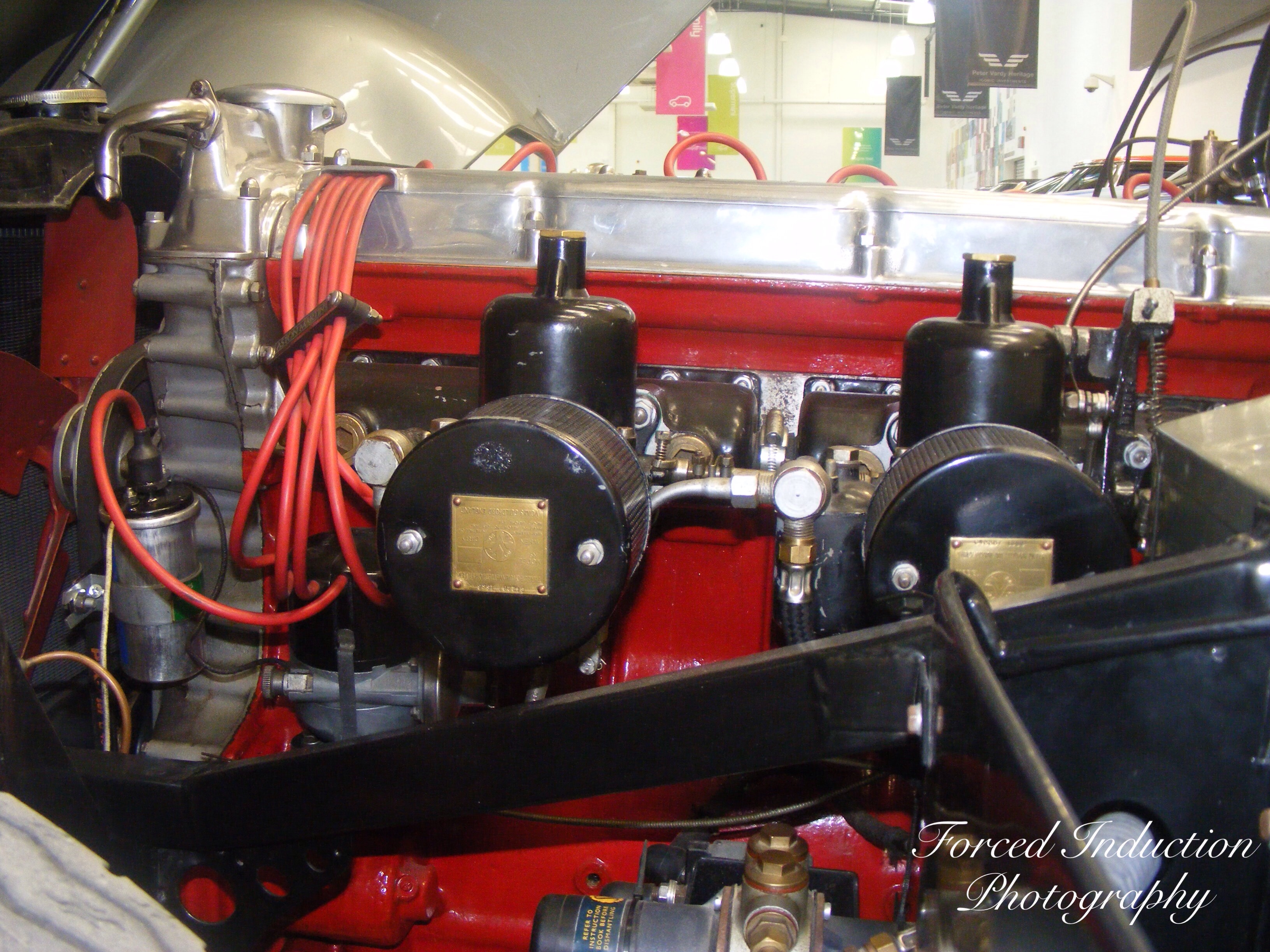
Early cars were available with a 2.6 litre dual carbureted inline six which produced 125 bhp while later cars were equipped with a 2.9 straight six which upped power to 140 bhp; decent power for the time. It was eventually replaced by the DB MKIII in 1957 which was more of a sports car than a GT Car. 

The DB2/4 in question is for sale with Peter Vardy Heritage in Hillington, Glasgow inside the Car Store – it is a two owner car which has been dry stored for 42 years, it is an early MK1 DB2/4 2.6 litre Saloon and has every single receipt and paperwork you could ever imagine – it even has the original manual and build/spec sheet with it too! 


It is currently up for sale for £240,000 here and has to be the best conditioned car I’ve ever come across – there’s no mark on it whatsoever, everything is like new inside and outside!

Whoever is lucky enough to buy it is going to have a beautiful car and a very rare car too as there’s only 448 examples left on the roads, this is a car i’ll probably never get to see again as it’s so rare!

Price wise it is in a totally different league to modern day exotics and supercars and is also significantly cheaper than other similarly aged Aston Martins – for instance a DB6 for sale will set you back upwards of £350,000 and a DB5 is well over a million pounds these days, so the DB2/4 is a bargain compared to those two vintage Aston’s.

I’d like to personally thank both Craig and Stuart and the rest of the salesmen from Peter Vardy Heritage for letting me come along and take photo’s and for also showing me around the car itself, without their help none of this would’ve happened!

If you ever get a chance to visit the Car Store i’d highly recommend going over to the Heritage Department and having a look at their stock, they have some absolutely unbelievable cars in stock – everything from a Mini Moke to a Ferrari 365 with some you’ll never get to see in the likes of a Museum or a car show, also because they are for sale you can also buy one of them if you have the money which is also an added bonus! 


Hope You Enjoy!

By Alex Jebson
Could there be a BRZ STi coming soon?

For the last 5 years or so now the Toyota GT86 & Subaru BRZ have been gracing our roads with their Flat Four engines and their RWD Drivetrain, in those last five years the same complaint has kept on plaguing the two identical sports cars – they’re just not powerful enough.

Now while Tuners and Aftermarket Specialists have been able to get around that by modifying them in all different ways, the manufacturers haven’t done anything to them to make them quicker, instead just giving them a facelift and changing a few bits and pieces here and there to make it more fun.

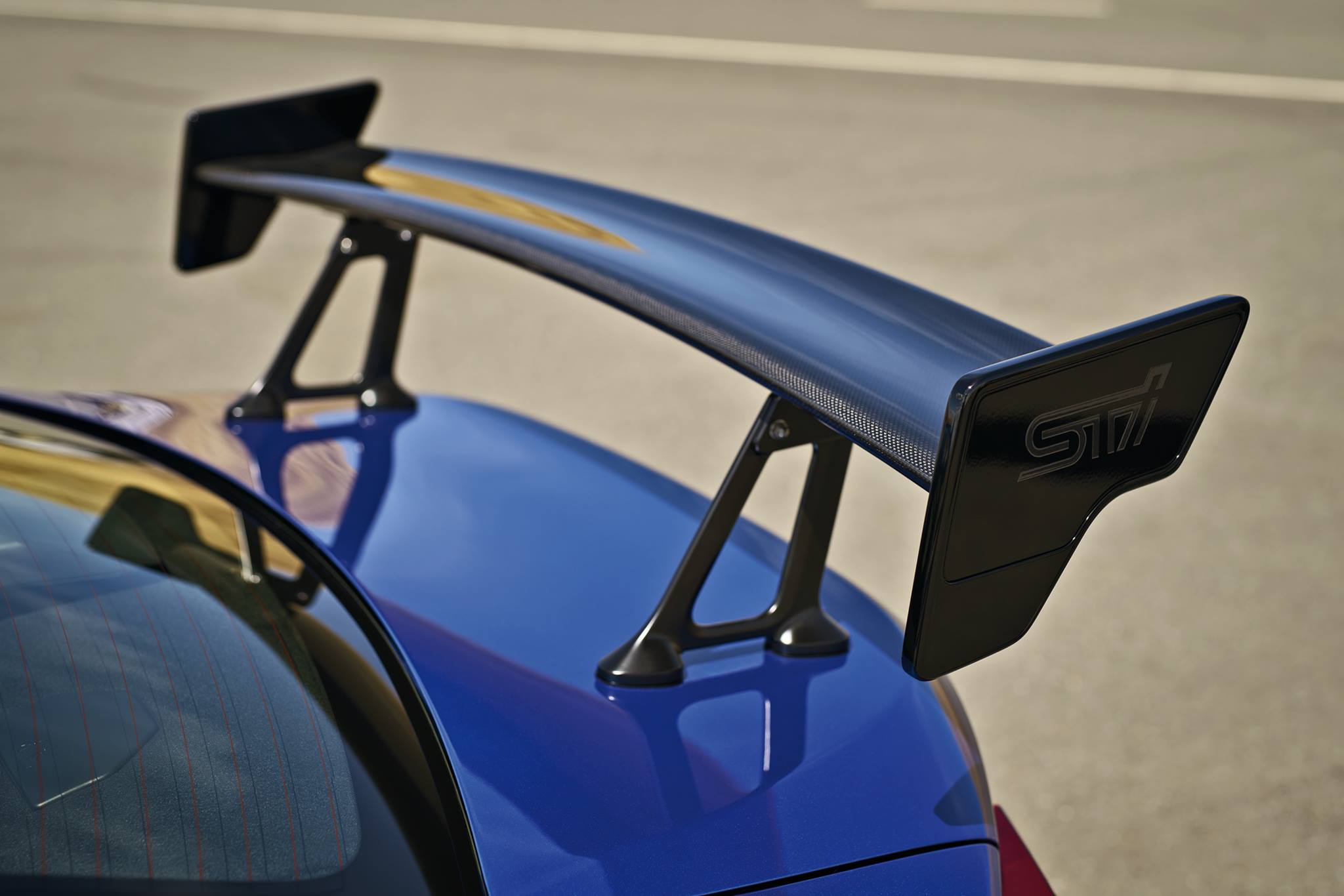
Thankfully five years after they were first released a fast version is going to hopefully be released by none other than Subaru, they released a picture on Twitter of what looks like the rear end of a BRZ with an almighty rear spoiler with STi embossed on it with the date 8/6/17 in the quote – could this finally be a BRZ STi?, I hope so!

IMG_20170531_134643

Subaru came out with an BRZ STi Concept back in 2015 which was hinting at an STi version of the BRZ but unfortunately nothing came of it, The Concept came out with 450bhp from it’s flat four engine, it had uprated brakes, stickier tyres and an aero package included.

Large Image_11041

If Subaru was to produce an STi version, a detuned version of the concept would be good as it wouldn’t need 450bhp to be a weapon – 300bhp should be enough.

So come on Subaru, do the right thing and put the BRZ STi into Production! We as petrolheads beg of you to produce it!

Hope You Enjoy!

By Alex Jebson
Tartan Tarmac Meets Are Getting Better & Better!

So after missing out on Aprils TT Meet due to a cycle race shutting all the roads off, I jumped at the chance as soon as they posted the May Meet details up – i wasn’t going to miss out this time!

I decided to bring along the C70 again as it had had some new parts fitted over the last few weeks including a new Alarm Siren, the Stereo Coded, plus a couple odds and ends replaced/fixed etc. On top of that I had done a little write up containing information on what had been done to her over the two years of ownership so people would come over and see what had been done & get some more information on her – even some members of Volvo Owners Scotland came along to show some support. 

Just like the two last meets, this months meet was at Motherwell College and as I’m a student there I knew where to go. We got there for 8:35 where it was relatively empty but slowly but surely filling up with people. After a while it was nearly full so I decided to walk around and meet some people and eye up the cars there, everyone was more than welcome to talk about their cars – and the cars…well they were unbelievable! 

Now I’ve seen supercars and I’ve also seen modified cars as well but I’ve never seen them in the same place at the same time, best bit of all however, there was no hate between owners and no stupid antics neither – highly unlikely as Police were there. 

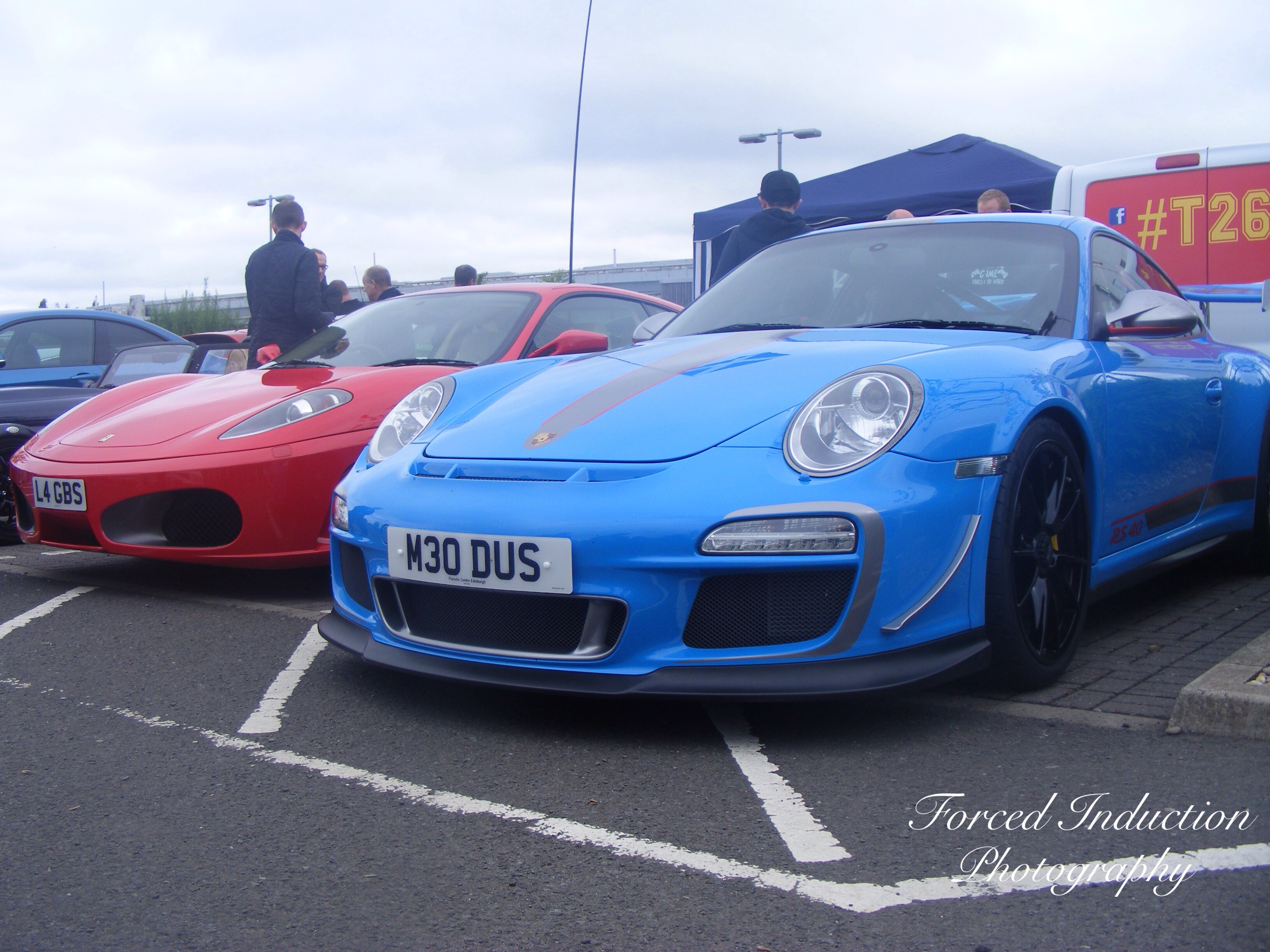
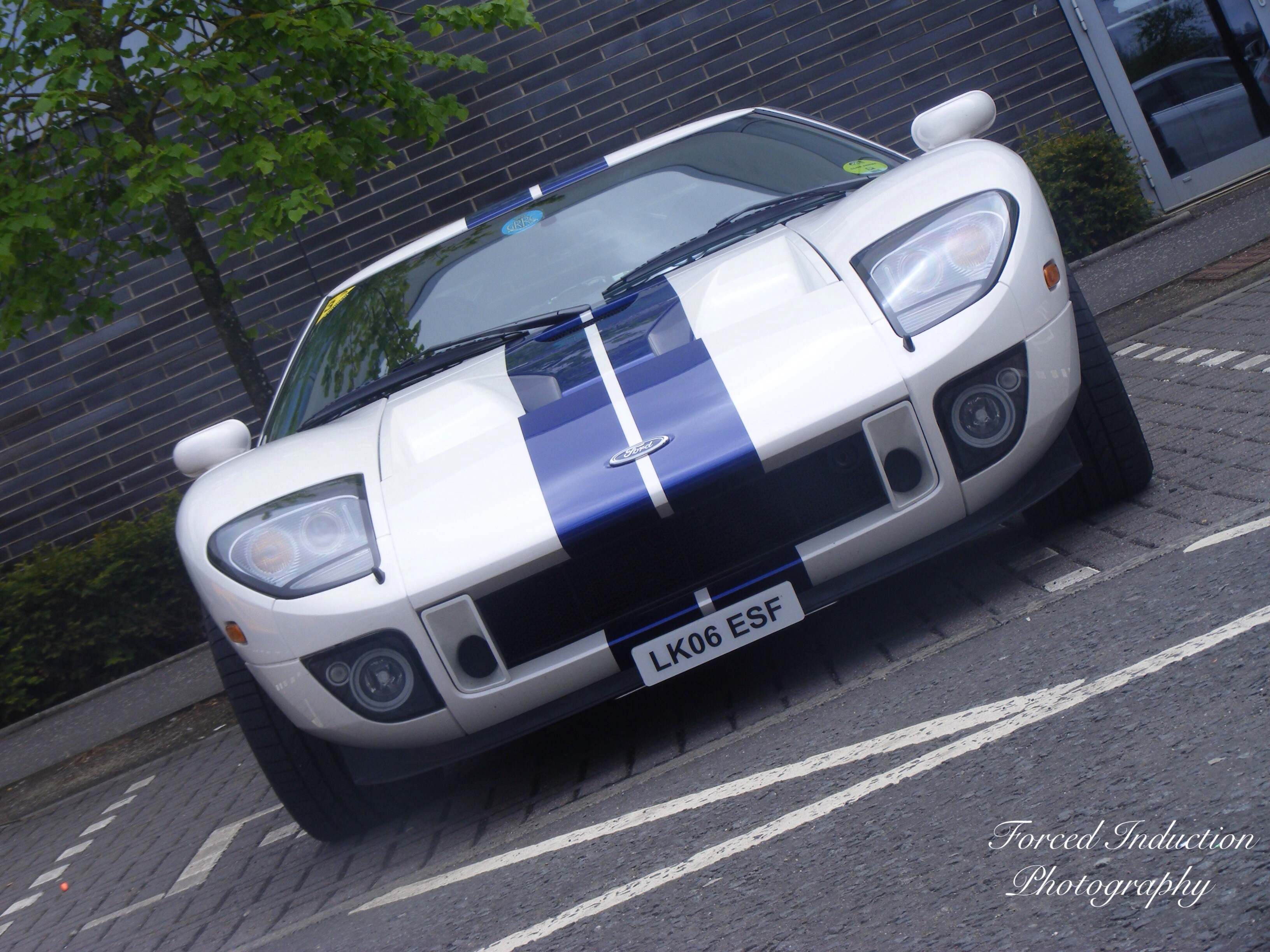
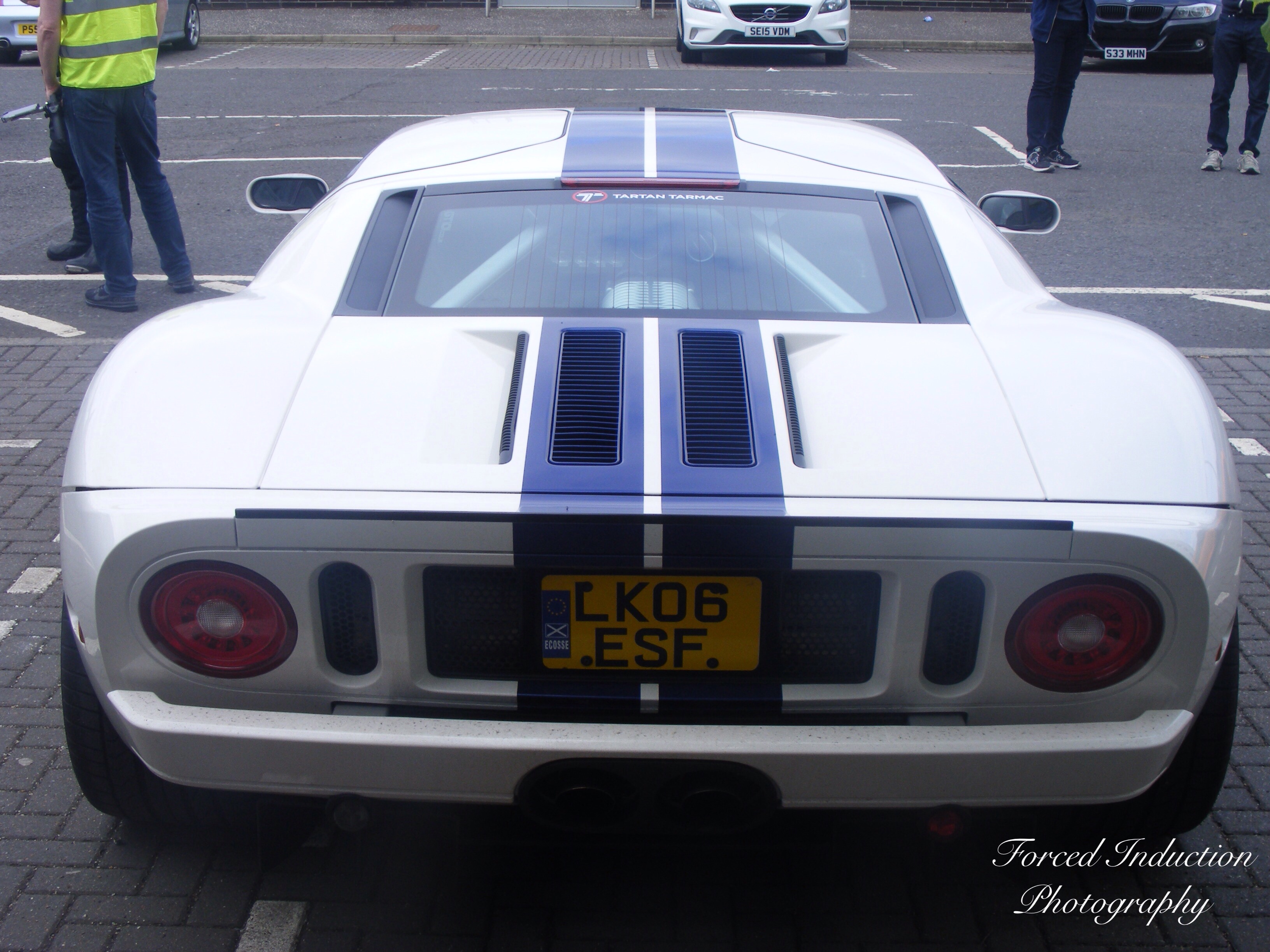
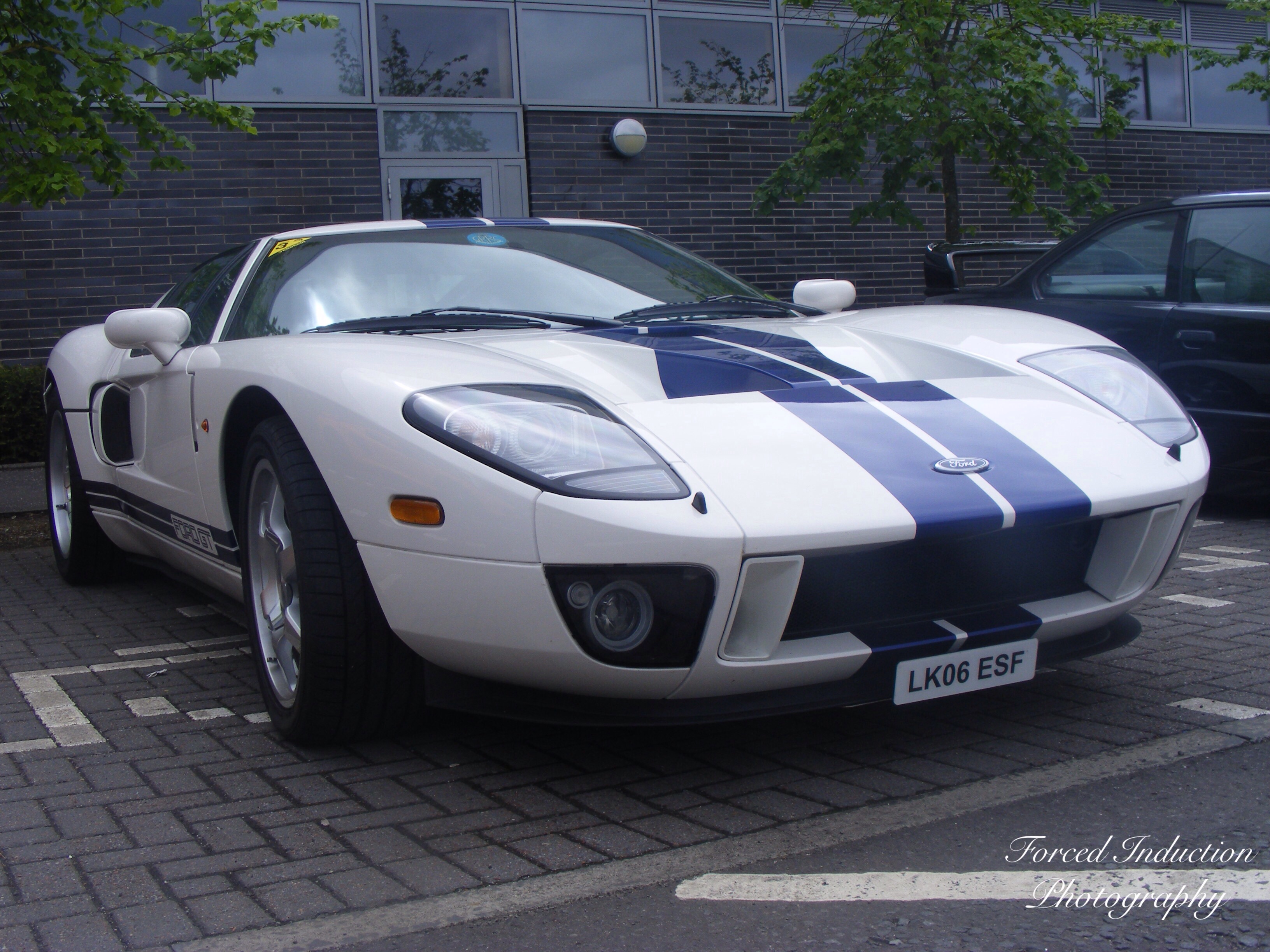
The cars there were awesome, since i was there last it seemed Supercar Driver was there as there was so many high end cars there since i was last there in March, there was a Ford GT which was owned by a Member of Tartan Tarmac, an Aventador Roadster, a MK1 Honda NSX, a Ferrari F430 and a Porsche 911 GT3 RS 4.0 of all things – one of the ultimate modern Porsche’s ever made, as well as all of them there was a Bentley Bentayga 4.0 V8 Diesel kindly given to Tartan Tarmac by Bentley Glasgow to test out for the weekend. 

as far as meets go, this had to be the best one I’ve been to, as well as the Best TT meet I’ve been to as well, the atmosphere was truly amazing and it’s what makes us petrol-heads a brilliant bunch of people. everyone was so friendly and wanted to share their cars with others. All in all a great meet!

Hope You Enjoy!

By Alex Jebson
#ProjectC70 has a new Alarm Siren!

For the last 6 months since #ProjectC70 started, the Alarm decided to pack in, what it would do was flash the hazards but it wouldn’t make a sound which only meant one thing – the siren was buggered!

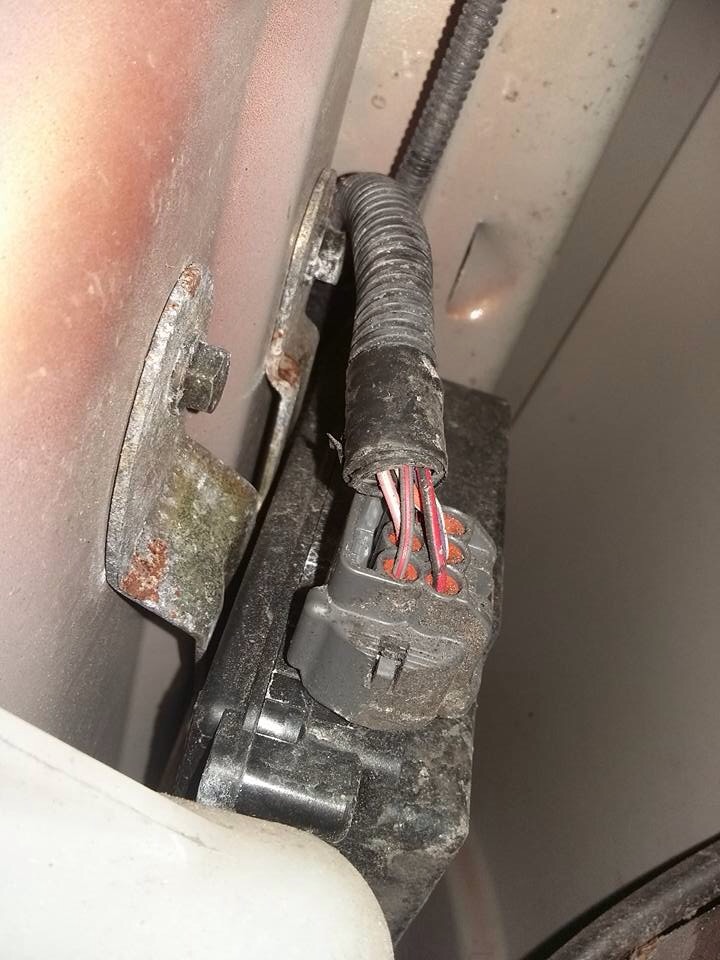
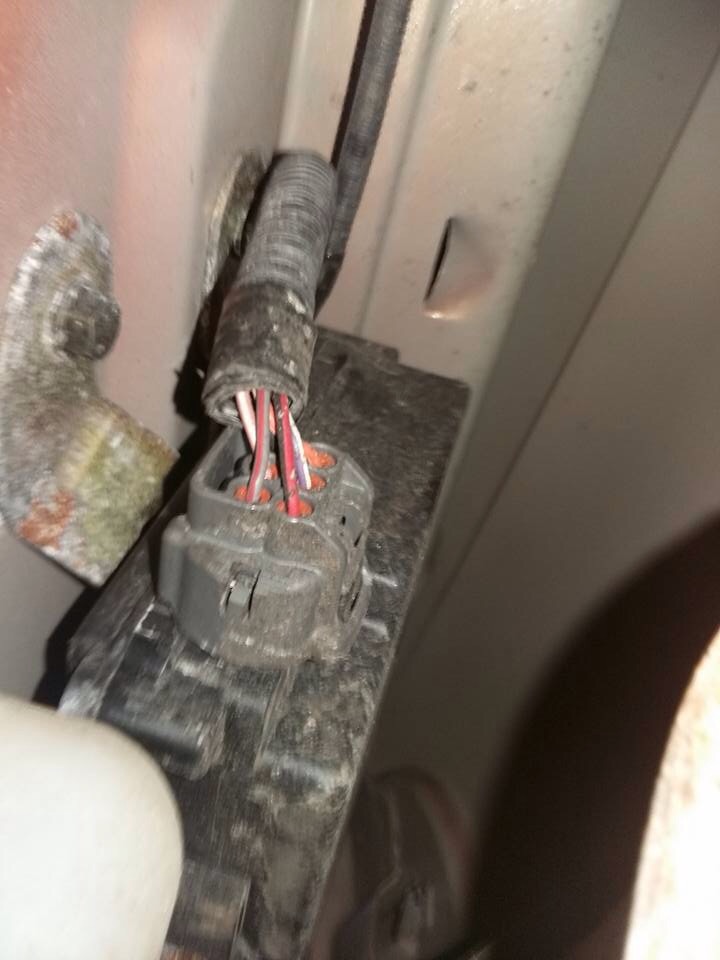
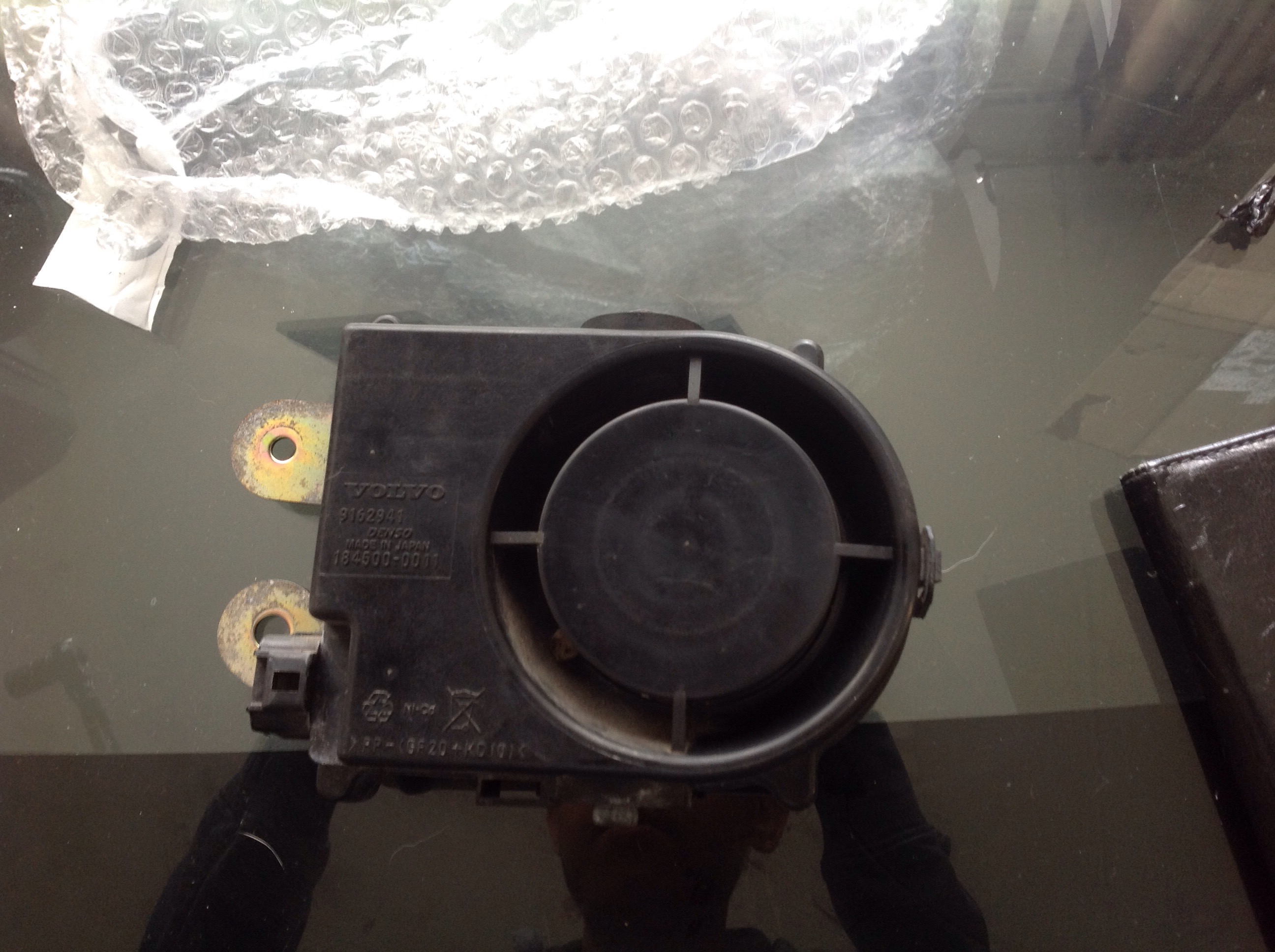
After looking online at the Forums i found out it was a common problem and it was hidden in the O/S/F inner wing above the washer bottle, what would happen is the battery pack inside the siren casing would run out of power and leak it’s acid onto the circuit board causing it to go faulty – time to get to work!


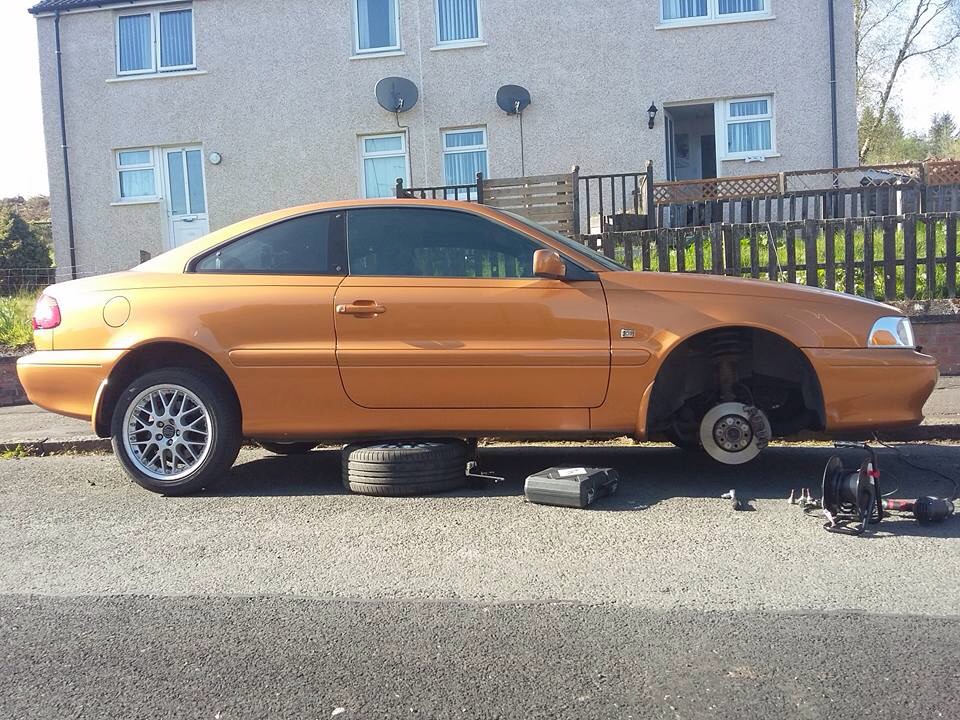
I started off by jacking the car off the ground using the cars own jack – yes i know this isn’t the safest option but it’s the best jack we’ve got until we upgrade which we’ll be doing hopefully soon.


After jacking the car up, i removed the wheel using my very powerful and trustworthy 400nm 1/2 drive buzz gun & a 17mm high impact socket which made things so much easier than a conventional Breaker bar, Spider and Torque wrench – the wheel was off within seconds!

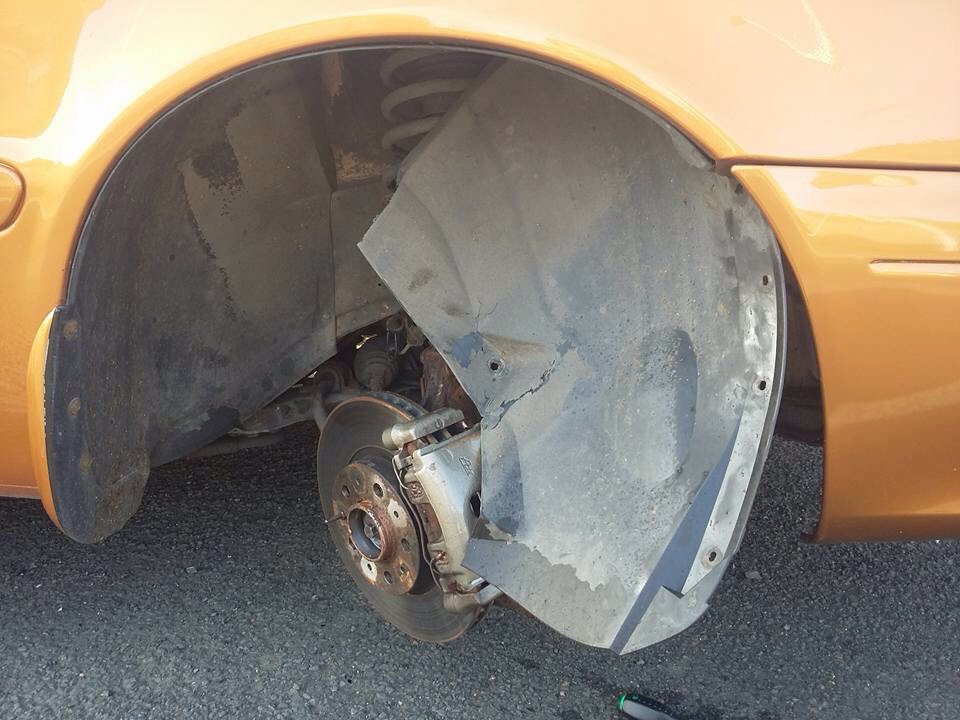
Once that was done, i removed the right hand side of the wheel arch liner by removing 2x 10 mm grommet style bolts and 3x T25 Torx Screws, once removed i peeled the liner back and got into where the old alarm siren was.


All it took to remove it was two 10mm bolts and a flat headed screwdriver to remove the electrical connection, reasonably easy to get into to be honest compared to more modern cars where they’re hidden in all sorts of places.


A few days after the old one was removed, i took it to Motherwell College where i currently study to find out exactly what caused it to fail, after about an hour of stripping it down and looking into it thanks to an Auto electrician in the college we found out that the battery pack was the culprit and had ran out of power, on top of that it had leaked out some battery acid onto the circuit board which meant that even though the siren was working and the circuit board was getting power it was toast so i had to get it replaced.

After finding one on Ebay and waiting until it arrived – which was today, it was time to fit the replacement which was the reverse of the strip down, alarm went in and got bolted into place, liner got put back into place and the wheel eventually went back on, once it was back in we decided to test it to see if it was working and after a while of playing around with it, it sprung into life and finally made a noise after 6 months of complete silence – it was fixed!


Best bit of all however was the price, now Volvo themselves were charging £170 for a new one and while that isn’t too bad for a new one whatsoever,  i got mine for £20 & Free Postage, that’s a £150 saving which can’t be sniffed at, and because i removed and refitted it i don’t pay labor costs at all, just the replacement part.

So finally after six months or so, she is safe against thieves and carjackers and the likes which is only a good thing. Not bad going for £20!

Here is a video of the new siren working: ​

​ 

Hope You Enjoy!


By Alex Jebson
 

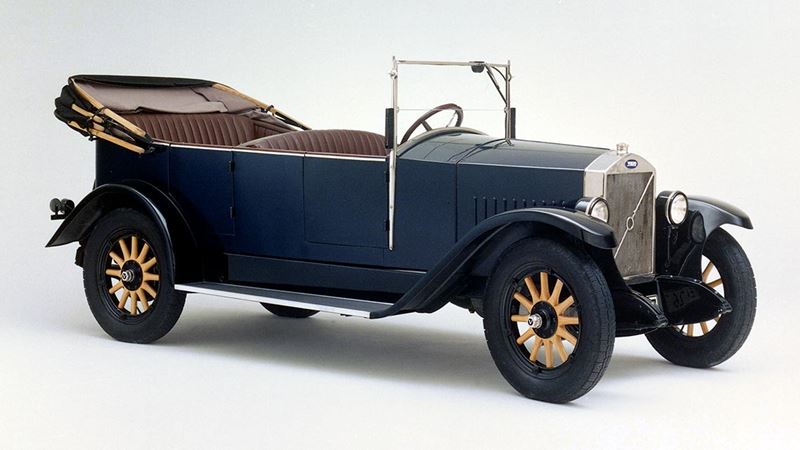
Happy 90th Birthday To Volvo Cars!

Let me Start by congratulating Volvo on 90 years in the car business!, over the years Volvo have been able to bring us top class safety standards and some pretty awesome cars along the way, anything from the PV’s of the 50’s to the XC90’s and S/V90’s of today.

On this day (14/4/2017) 90 years ago Volvo Cars was started up by two men called Assar Gabrielsson & Gustav Larson, these two men both worked at SKF which is a Ball Bearing Making company founded in Gothenburg. Their Vision was to build a tough, well built Swedish car which could withstand the weather and harshness of Sweden’s country roads. The name Volvo was originally a subsidiary of SKF which was intended to be used as a new series of SKF Ball Bearings.

Assar Gabrielsson, who was an SKF Sales Manager & Gustav Larson, a KTH Royal Institute of Technology Educated Engineer were both unhappy with the cars in Sweden at the time as they just couldn’t cope with the harshness or weather Sweden was used to. they both met in a Cafe in Gothenburg and started talking about how bad the cars were and how they could be improved to be able to cope with the Swedish roads & Weather, after talking for a while they decided to join up as a team to build the Swedish people a well built, tough car which would be able to cope – Volvo Cars Was Born! Image result for assar gabrielsson Gustaf Larson

Manufacturing started on the 10th August 1926 where they built up to ten prototypes of their first car called the OV4, otherwise known as Jakob, it was a 4 door convertible car with a 2.0 4 cylinder engine and was made between 1927-1929. In 1928 Volvo started to build Trucks, (soon to become Volvo Trucks) as well as cars which became a huge success, in 1930 Volvo sold 639 cars and started to export trucks to the rest of Europe soon afterwards, it was not until after WW2 that Volvo started to become well known. Volvo OV4

In 1935 Volvo acquired the company Pentaverken, who had been providing Volvo with engines, this provided a secure supply of engines and entry into marine engines.

In 1934 Volvo launched their first ever Bus, called the B1, which then turned into Volvo Buses, in the early 1940’s Aircraft engines were added into the ever growing range of products, at the same time Volvo had released the PV Series of cars.

Volvo B1 Kutter 1934 wallpapers (1024 x 768)

This was a small family car which had a lot of styling cues of American cars at the time, with curves never seen on Volvo’s before, the PV was also the first Volvo to come with their new safety feature, The Laminated Front Windscreen, essentially two pieces of glass stuck to a piece of plastic in the middle, this made crashes safer as customers weren’t cut with glass if involved in a crash, in 1959 however, Volvo was about to change the rule book forever and take a huge step in safety standards.

After doing numerous tests on car accidents and what caused them and what caused injuries or sometimes death, Volvo decided to bring out a new piece of safety equipment we now take for granted, the simple Three Point Safety Belt. It was invented as we know it by a chap named Nils Bohlin who introduced it in 1959 as standard equipment, in addition to inventing it he showed off his new creation by running different tests in front of Journalists around the world, unbelted occupants suffered horrific injuries while the occupants who were buckled up in the new three point belt came away unscathed. 

Also bought out in the PV and Following Volvo’s afterwards was a safety cage which would stop the roof from caving in if involved in a rollover. Image result for volvo safety cage

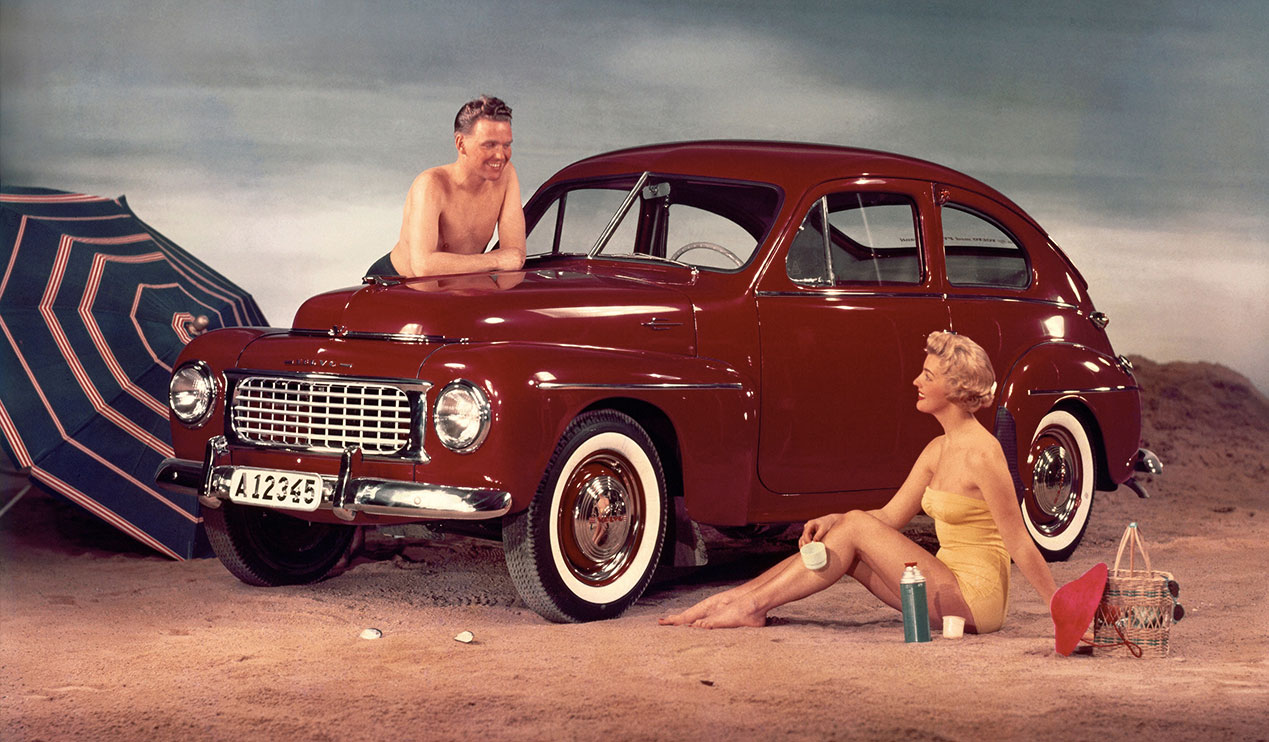
in 1956, Volvo introduced the Amazon, it was a mid size car which could fit a family of four quite easily, it was built in 4 door saloon, two door saloon and as a five door estate, it shared the wheelbase with the PV as well as the tall posture and H-Pointing seating too, Volvo sold over 667,791 Amazons from 1956-1970 making it the most popular Volvo ever made.

Image result for volvo Amazon

in 1961, Volvo launched the P1800 Coupe as their own take on the forever popular GT Segment of the car industry, it produced 100bhp from it’s 1.8 4 cylinder engine,it was designed by Pietro Frua who was one of the leading coach builders and car designers during the 50’s and 60’s, a P1800 owned by Irv Gordon has the Guinness World Record for Highest Mileage on a car with over 3 million miles. That wasn’t the best bit however as it became popular as the main car in a TV Show called The Saint which starred none other than Roger Moore himself, That’s right, Roger More who played James Bond through the 70’s played Simon Templar and drove a Volvo – Cool or What! as a matter of fact he actually owned one of the Cars from The Saint as his run around.

Image result for volvo p1800 the saint

In 1966 Volvo launched the 144 and then eventually the 164, these came in two and four door saloon models (142, 144) as well as a five door wagon (145), it was produced from 1966-1974 before being replaced with the most well known Volvo ever made, the 200 series. Image result for volvo 144

These were a range of executive cars produced from 1974 to 1993, the 200 series cars were well known for being as tough as old boots and became the first Volvo to ever be referenced as a Tank due to it’s build quality and it’s ruggedness. they came in two door sedan, 4 door sedan, 5 door wagon and a 2 door Coupe (known as the 262c Bertone) they came in different flavours, with anything from grocery getters to Group A. Race cars competing in the World Touring Car Championship during the eighties, it was the safest car when launched and was used as a reference point for other manufactures, it also was the cleanest car emissions wise when launched in California. it even out lasted production a year after it’s predecessor the 700 series stopped production. Image result for volvo 262c

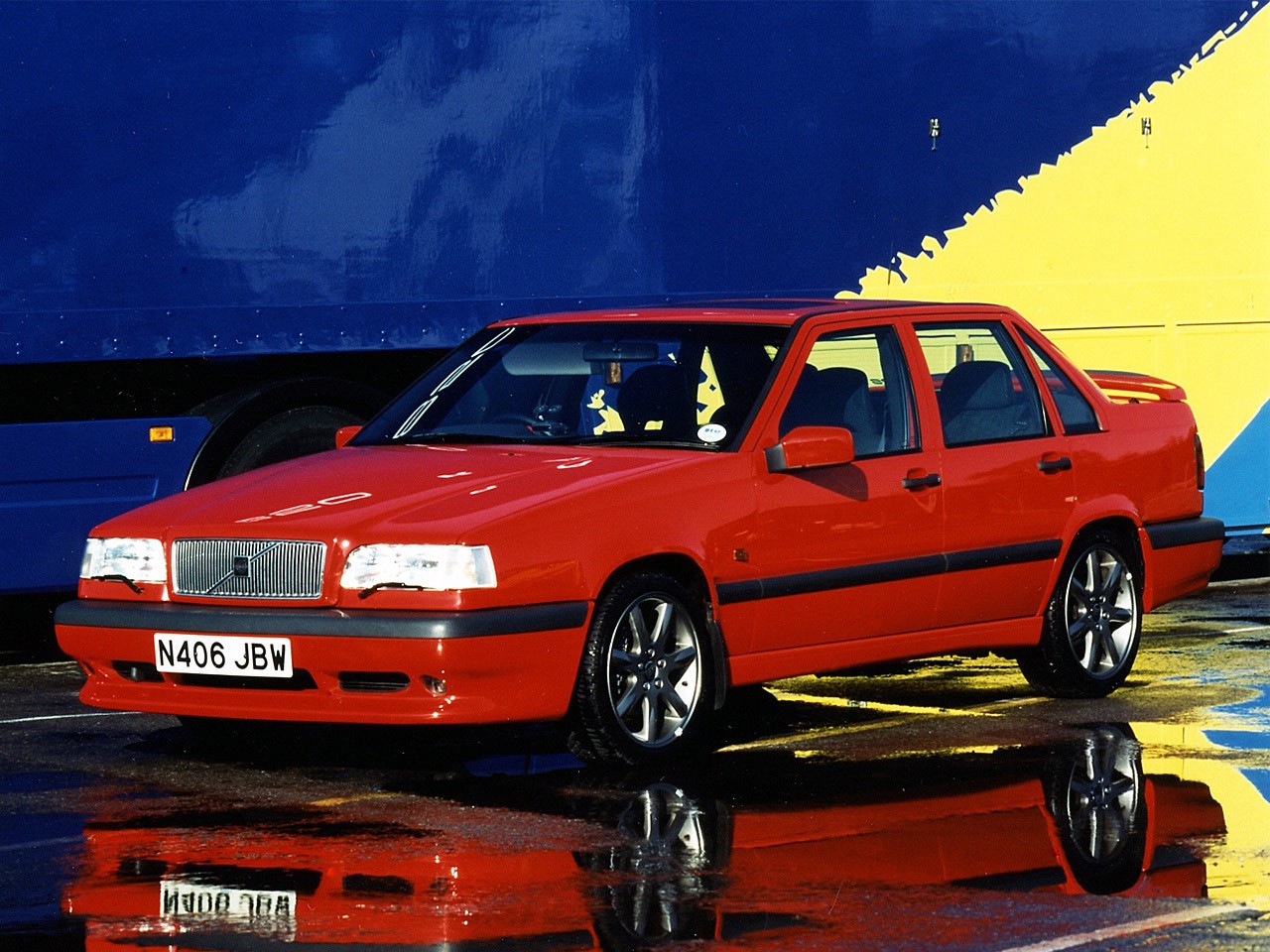
During the Nineties & Noughties Volvo became synonymous with adding performance to their cars with thanks to their Modular family of engines, these were consisting of 4 cylinders, 5 cylinders and 6 cylinder units which lasted from 1993 till 2014, they were put into cars from 850R’s to XC90 SUV’s, from C70’s to the big V70 Estates. Image result for volvo 850R

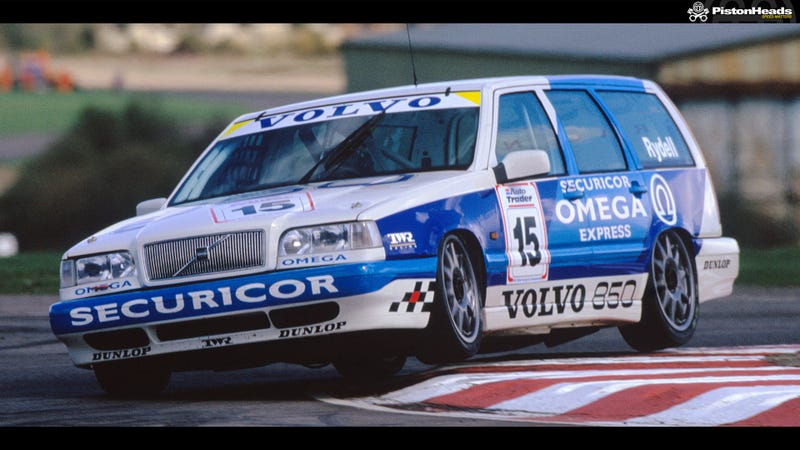
The best engine out the lot was the T5’s, they showed people that Volvo could provide a powerful car with a very good driving experience, this was helped by the UK Police having 850 T5’s during the nineties and Volvo and TWR (Tom Walkinshaw Racing) racing some 850’s in the BTCC from 1994 to 1996 before getting replaced by the S40 Super Touring Car. Image result for volvo 850R

These Days Volvo have changed for the better, they’re new cars are now even more luxurious than even with their lineup winning Car of The Year all over the place, the Modular engine was dropped in favour for 2.0 4 cylinder units which provide decent power with better fuel economy which was a downside of the older engines. for those who still want Performance from their Volvo’s you can always go to Polestar which was recently bought by Volvo themselves as an in house tuning company similar to AMG and Mercedes-Benz. Image result for Volvo XC90

So Here’s to Many more years Volvo, long may it continue!

Hope You Enjoy!

By Alex Jebson
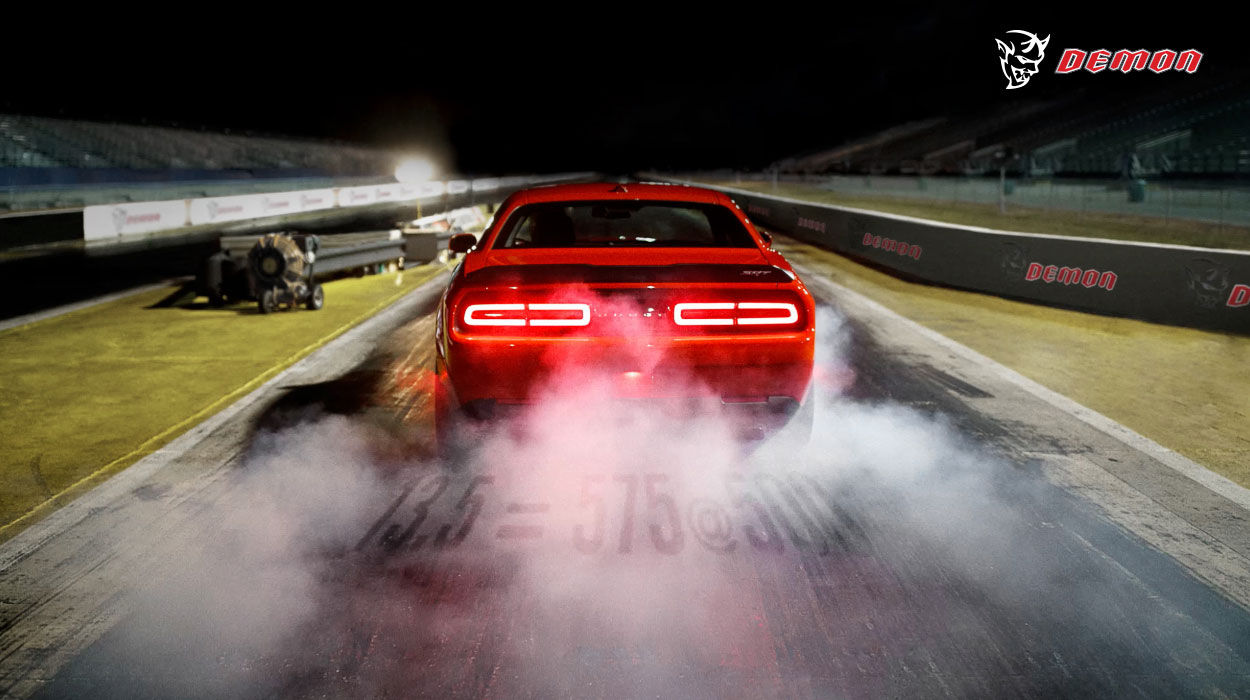
The Brand New Dodge Challenger SRT Demon Is As Crazy As It Gets!

Finally!, After all this time of getting teaser shots of it over these last few weeks and months, Dodge have officially released the absolutely crazy Dodge Challenger SRT Demon.

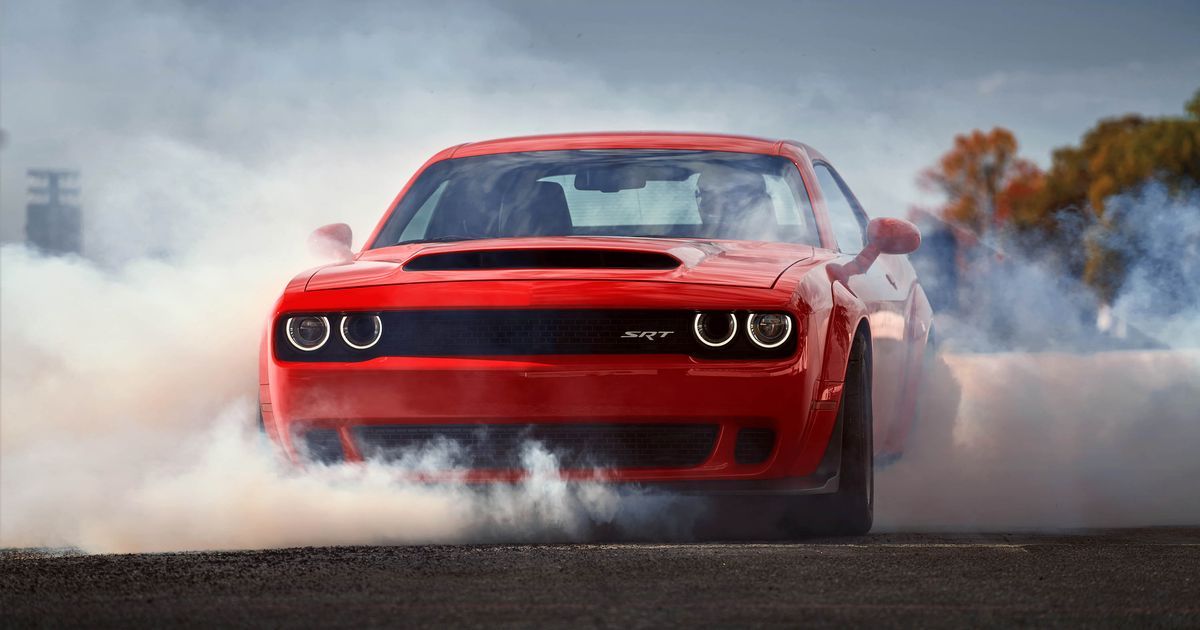
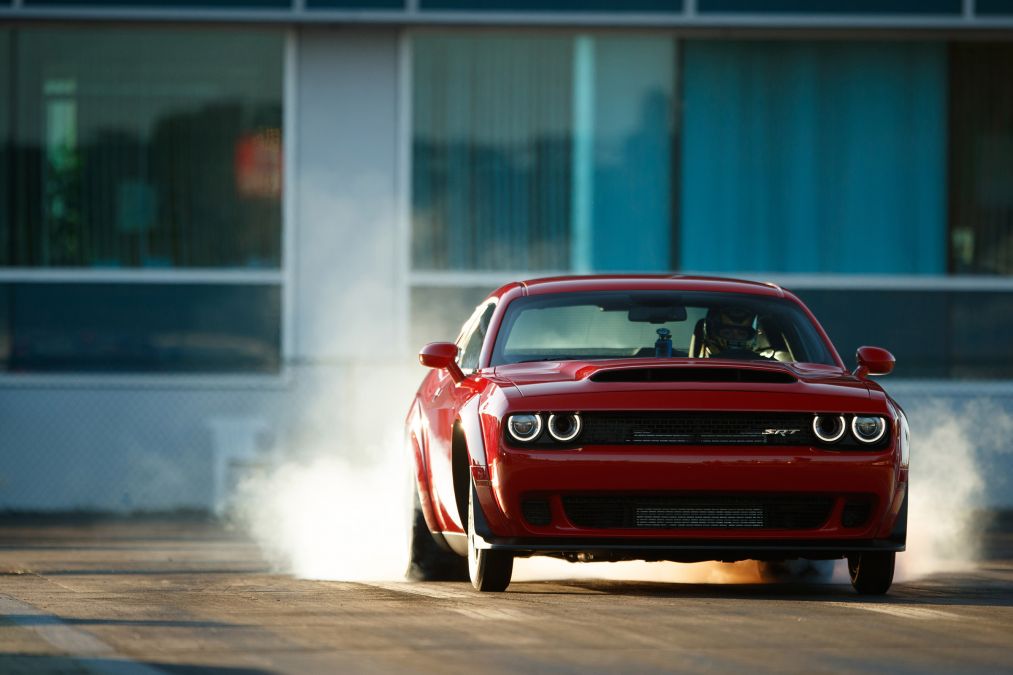
Lets start off with the numbers first shall we?. First of all it produces 840bhp from a 6.2L Hemi Demon V8, it can do a 0-60 mph sprint in 2.3 seconds pulling 1.8 G’s of force, 100 MPH comes up in 5.1 seconds. it can do the quarter mile in 9.65 seconds at 140 mph, overall torque is 770 ib-ft with a rev limiter of 6,500rpm, it can do a 0-30 in 1 second which is unbelievable, Power wise it has 133bhp more than the already mental Challenger Hellcat. Take That Shelby and Chevrolet! Dodge Demon (2)

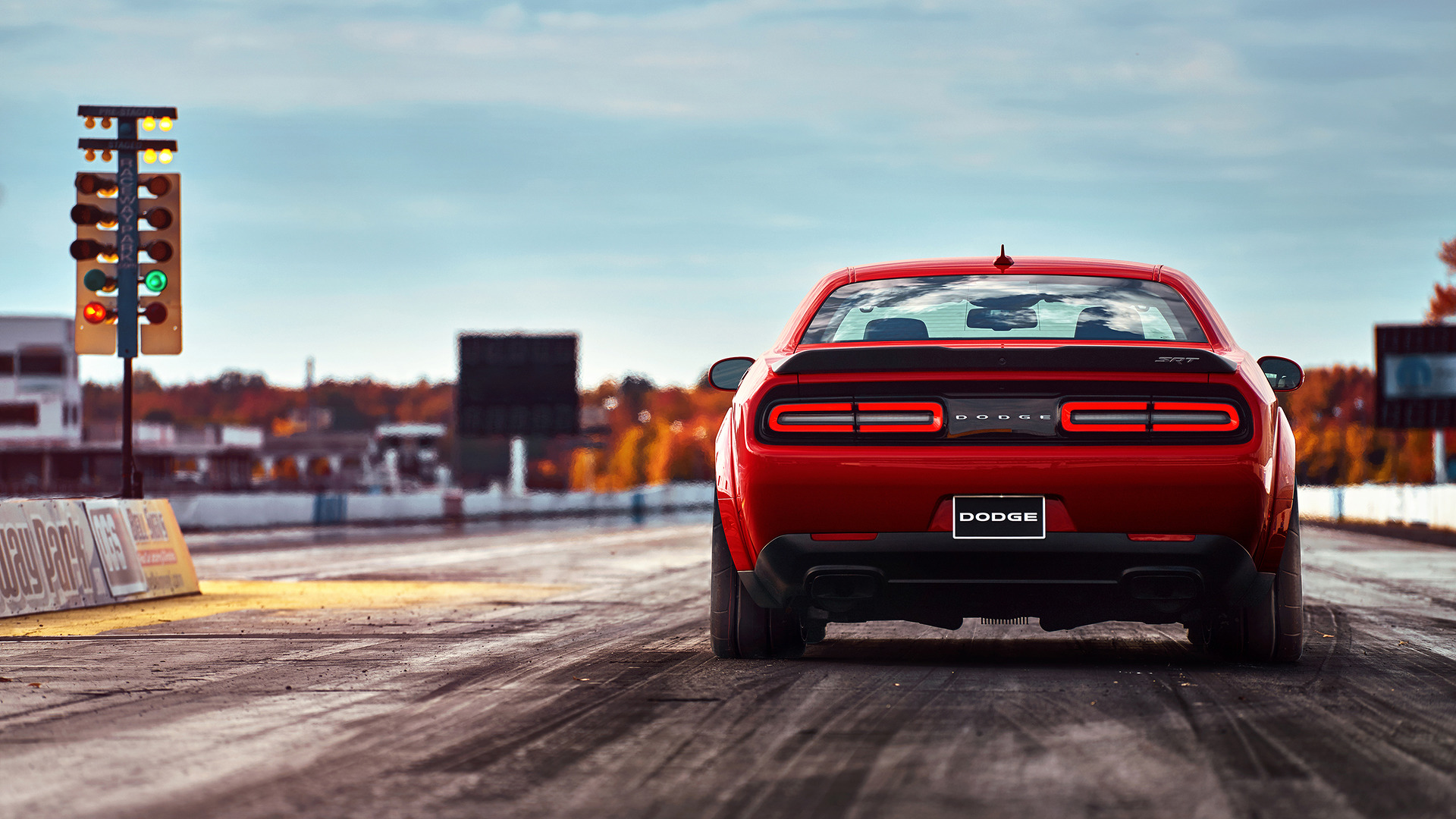
On the outside it is very similar to the Hellcat in terms of looks but seems to of started on the steroids, it has massive scoops on the bonnet, a front splitter, wide arches and absolutely huge tires, a rear spoiler and Quad exhausts. Dodge Demon (6).jpg

Mechanical wise it has the first ever Liquid-to-air charge air cooler system which drops intake temperature by 45 degrees which is the first time it’s ever been fitted to a production vehicle, to go along with that it comes with updated rear-gearing to help put it’s torque down, the largest functional cool-air intake system ever to be found on a production vehicle, it has a 2.7 litre supercharger which puts out 14.5 pounds of boost which can switch between running on traditional pump fuel and 100 octane racing gas. It also sits on Nitto Drag Radial Tires for the full drag racer effect. It has the highest horsepower of any production car, the highest G Force of any production car, First Wheelie from a production car, Quickest 0-60 of any production car and the world’s fastest 1/4 mile of any production car. Dodge Demon (3).jpg

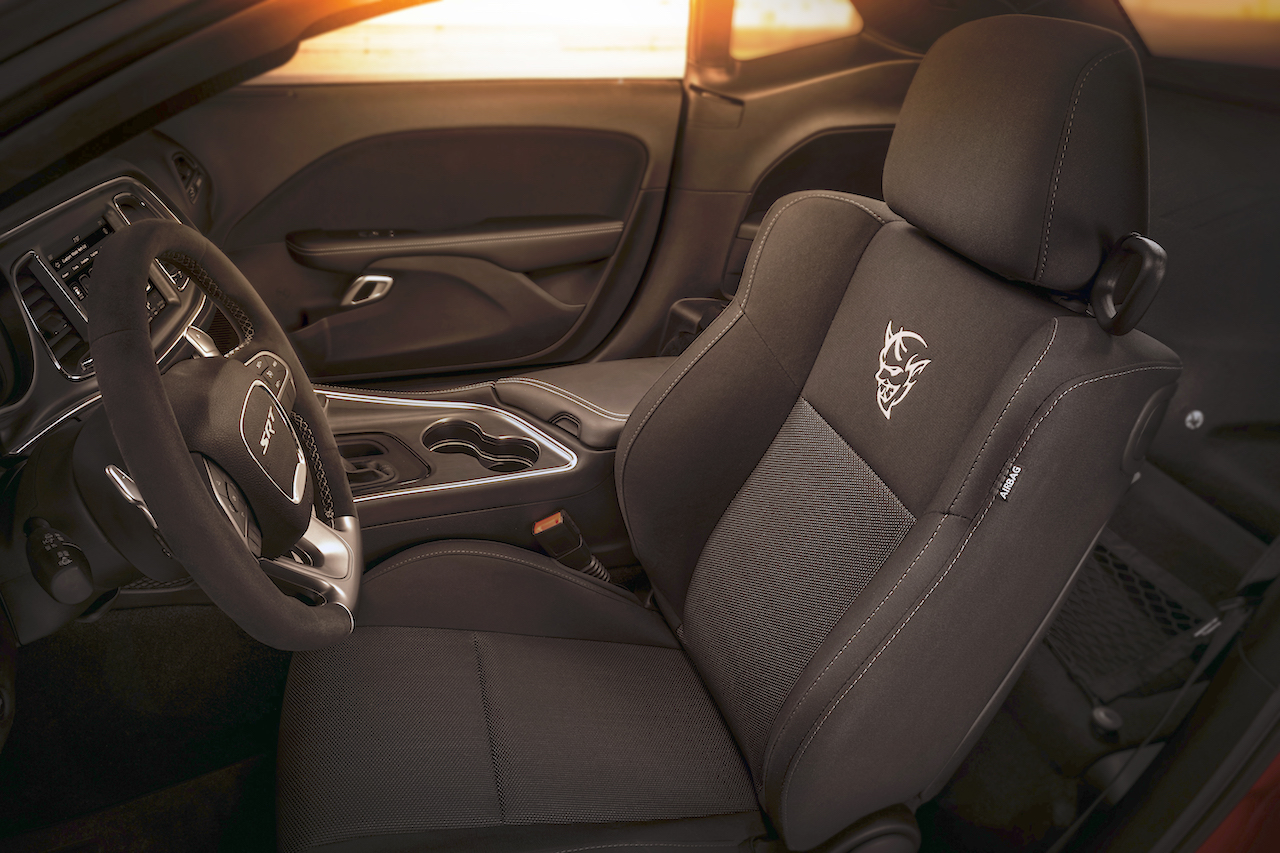
Interior wise it’s been stripped out with only the drivers seat staying, the passenger seat and the rear seats can be put back in for a $1 each- yes, you read that right!, The reason why the seats are taken out is to save weight as the Challenger isn’t exactly a lightweight car, also the rear suspension is loosened to help shift the weight to the rear quicker than a traditional Hellcat. Dodge Demon (5).jpg
the Demon can reach full boost within six feet of launching off the start line by using drag technology which is the first time this has ever been applied to a production vehicle. it’s so crazy that the NHRA confirmed the quarter mile time then instantly banned the car from competition straight afterwards – way to go Dodge! don’t worry though, buyers are still aloud to run it, just not compete in it. Dodge Demon (4).jpg

The Demon is a proper drag car for the streets with super skinny drag tires also in with the car, like what you’d find on any proper drag car. The Demon is a sub 10 second car straight out the box from factory. Dodge Demon (7)

Prices haven’t been revealed as of yet and there’s no info of how many will be made neither.

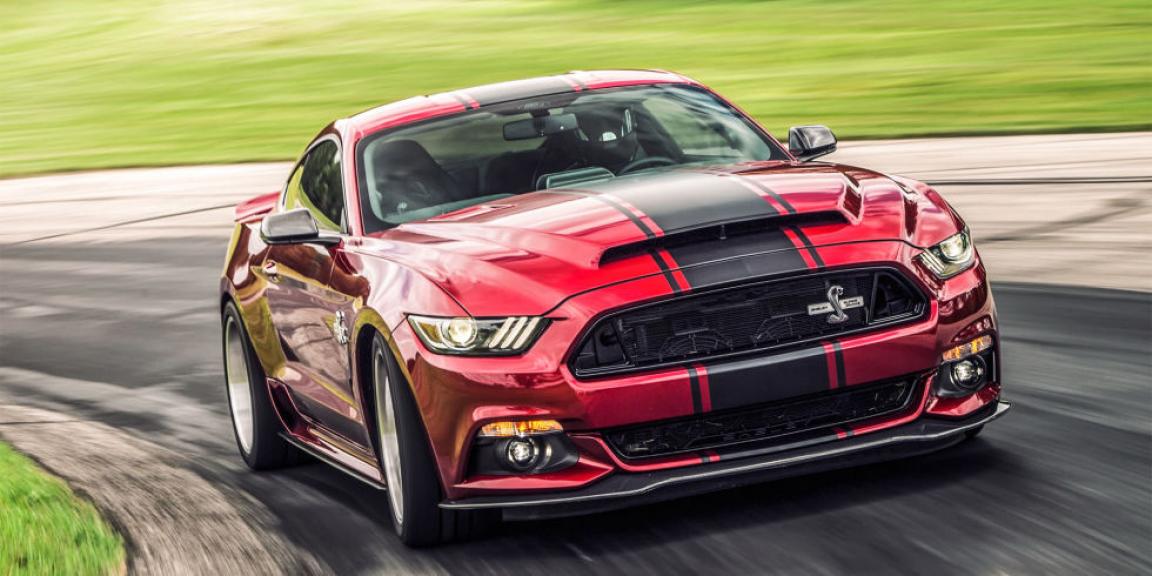
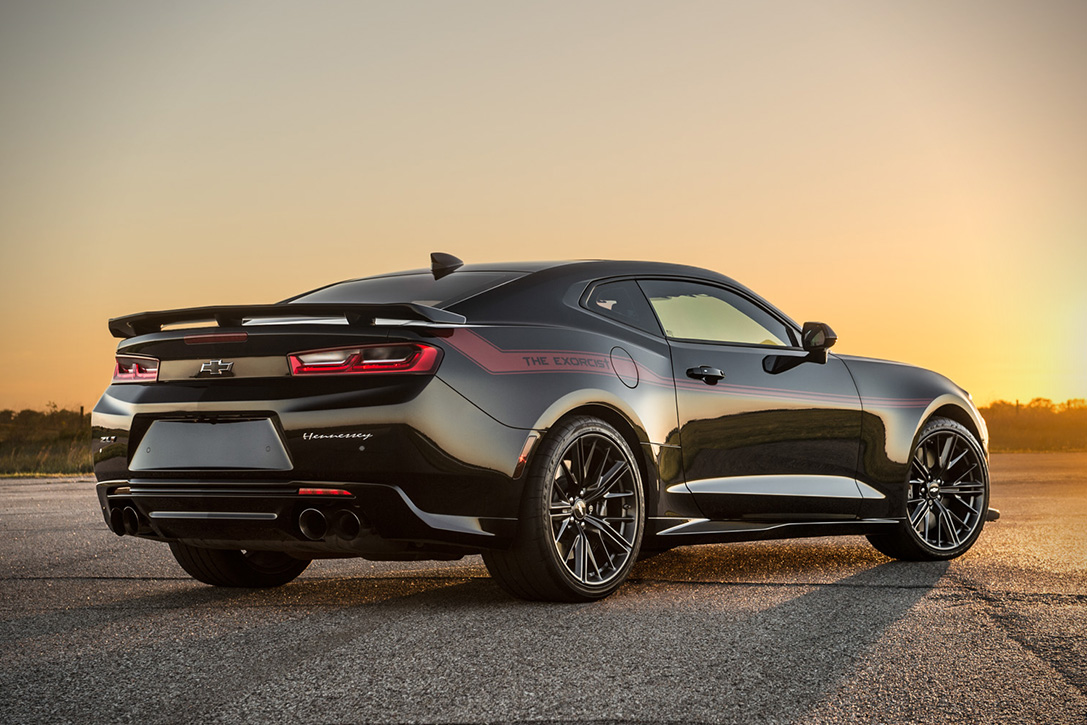
it’s rivals are the Mustang GT500 Super Snake and the Hennessy Exorcist which have 750 bhp and 1000bhp respectively which puts the Demon slap bang in the middle of both it’s rivals. 2017 Mustang Super Snake

Hennessy Exorcist.jpg


Hope You Enjoy!


By Alex Jebson.

Say Hello to the new “Q By Aston Martin” Aston Martin Vanquish S Red Arrows Edition!

So here she is!, the brand new “Q By Aston Martin” Vanquish S Red Arrows Edition, it starts off as a normal Vanquish S which is then completely reworked by Aston’s Q Division (Similar to Mclaren’s MSO).

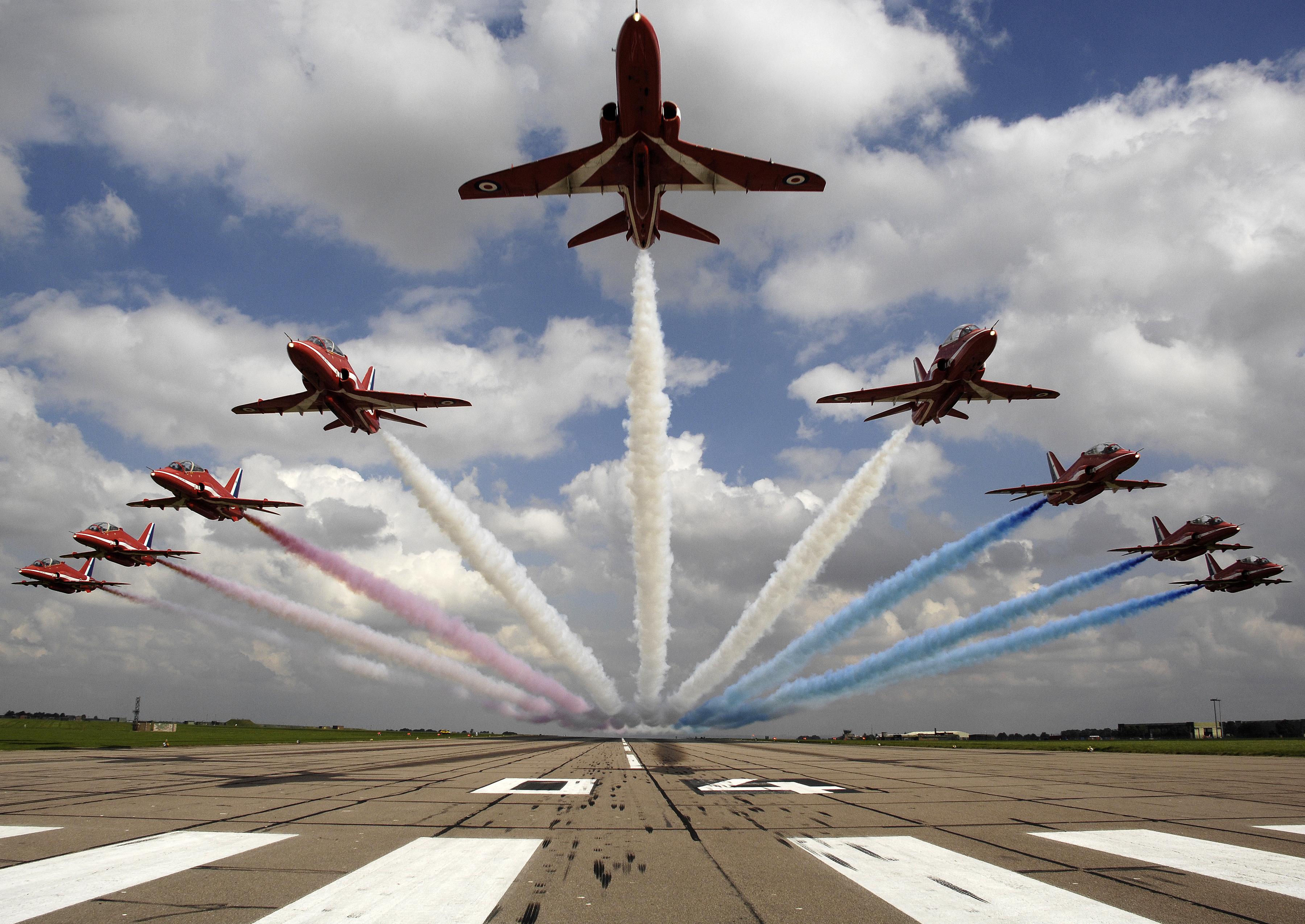
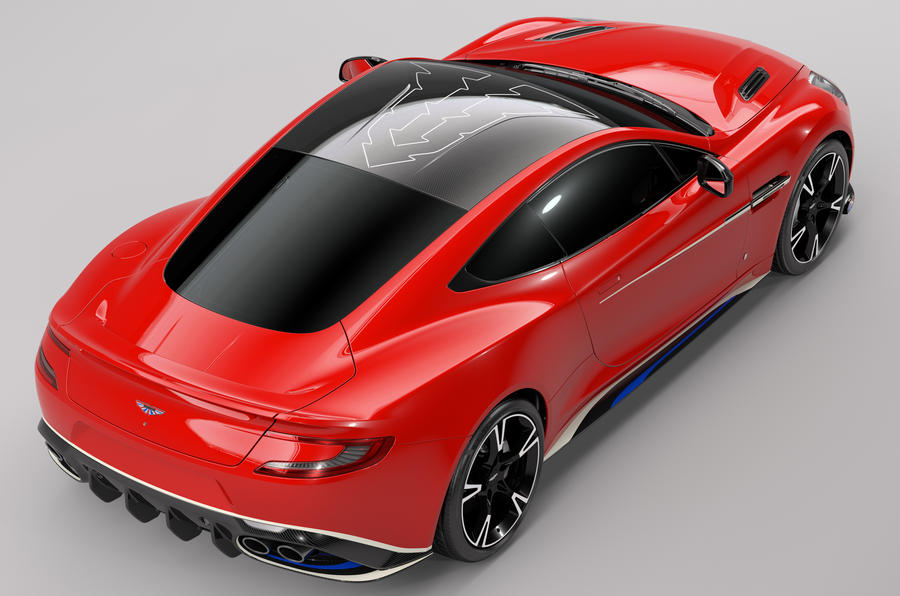
it is finished in striking Eclat Red which mirrors the livery of the Red Arrows Hawks – with Eclat being the Red Arrows Motto.

Q By Aston Martin Vanquish S Red Arrows Edition (3).jpg

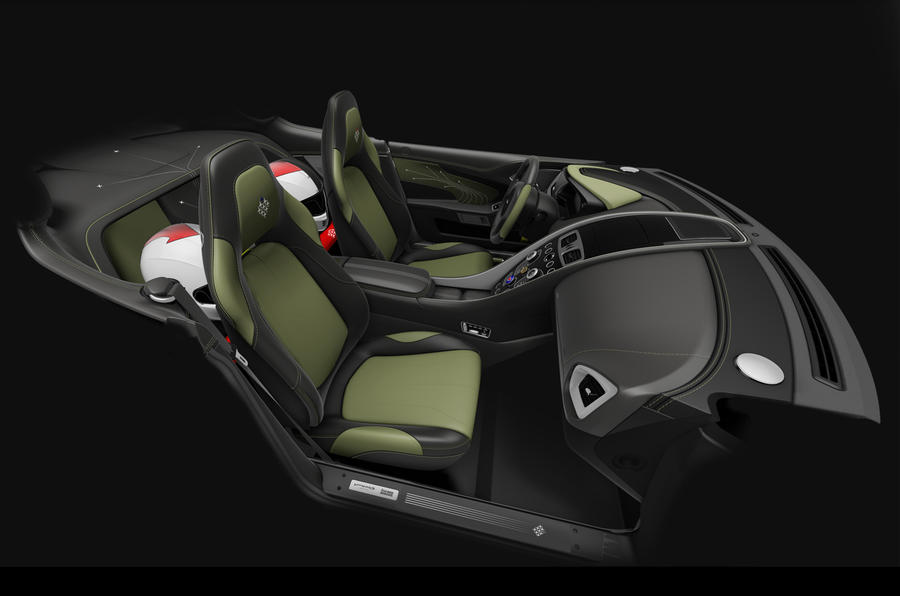
Interior wise it has a One-77 derived steering wheel, RAF Inspired details such as Pinewood green inserts that evoke the design of the flight suits and the Martin Baker Ejection Seat fabric, the signature Red Arrows emblem of the nine aircraft in their well known ‘Diamond’ formation embroidered on the seat backs along with unique sill and engine plaques – with the latter being signed by the pilots of  the Red Arrows in formation of build ( i.e N0.1 Red Arrows Pilot signing the first car so on so forth).

Q By Aston Martin Vanquish S Red Arrows Edition (4).jpg

the RAF Areobatic logo will be embroidered on the transmission tunnel, the vehicle will be a 2+0 layout allowing for storage of unique Red Arrows Racing helmets, the switchgear on the steering wheel will be inspired by aviation instrumentation, there is also Black/yellow hatched design pattering on the seat folds and door pulls.

on the outside there is subtle details including white and blue carbon livery detailing to the white ‘smoke trail’ feature on the side strakes, a carbon fibre roof panel mimicking the canopy design of the jets, union jack enamel wing badges as well as a titanium exhaust system finish off the exterior package.

Q By Aston Martin Vanquish S Red Arrows Edition

there is only going to be 10 examples in the entire world with 9 going to customers and the last one being gifted to the RAF Benevolent Fund which provides support to former servicemen of the RAF and their families.

The car celebrates the 52nd anniversary of the Official Aerobatics Team of the RAF or as we know it The Red Arrows  who started in 1965 beginning with the Folland Gnat Trainer Jet and then eventually going onto the Hawks of today – over the years The Red Arrows have became synonymous with incredible precision and an amazing spectacle with them doing shows all over the world from events like the Goodwood Festival of Speed to Royal events and also various Air shows. The Red Arrows.jpg

The Aston Martin brings all the best aspects of The Red Arrows and puts them into an absolutely gorgeous package to stun even the non car people of the world – Aston Martin have done a really good job on the car!

Q_By Aston Martin Vanquish S Red Arrows Edition (1).jpg

The car is the 3rd Aston Martin Special edition from Aston Martin Cambridge; the same branch who created and commissioned the 80 V12 Vantage S Spitfire Edition cars which celebrated the Spitfires first flight and also the Vantage S Blades Edition.

Performance wise it is unchanged apart from the Titanium exhaust system meaning it’s V12 has 592bhp & 465ib ft and a 0-60 time of 3.5 seconds and a 201mph top speed, prices haven’t been released as of yet but expect it to be in the £200K – £250K range upwards.


By Alex Jebson